
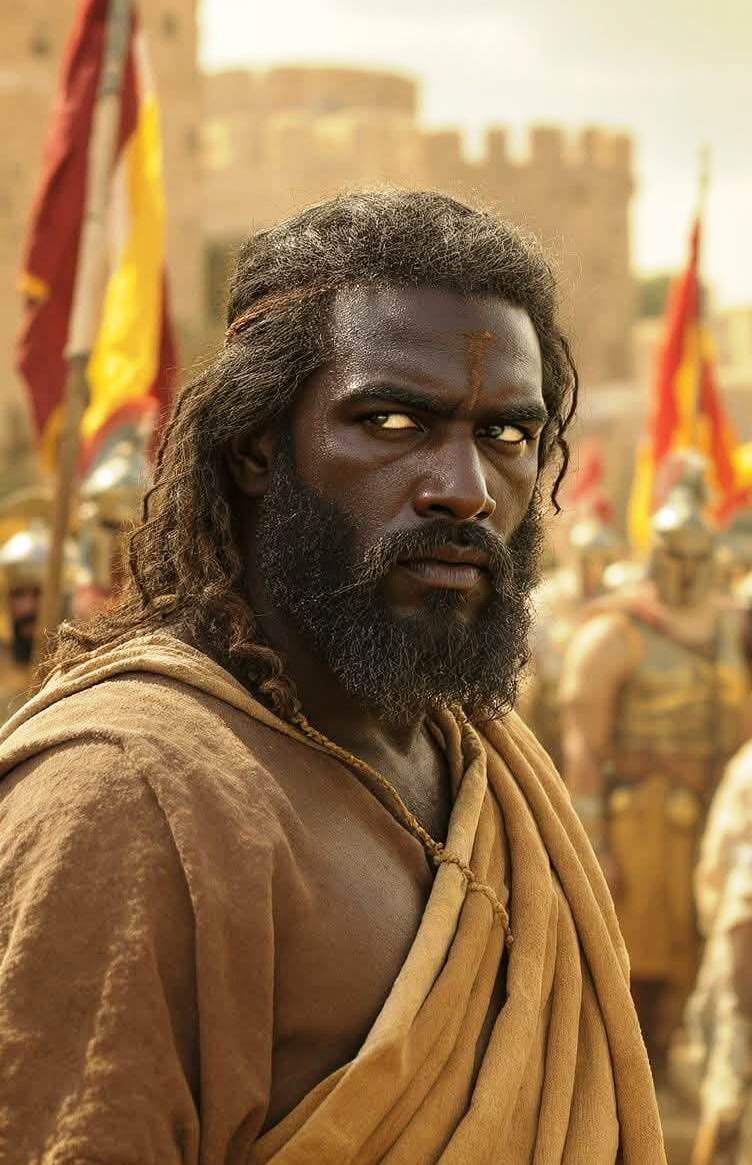
by Nchonganyi Westgate Junior
He was not called Jesus. His original name was Yeshua (or Yehoshua), a Hebrew name meaning “Yah saves.” The name “Jesus” did not exist in any language during his lifetime. In fact, the letter J was only added to the English alphabet around the 1500s. Before that, translations moved from Hebrew to Greek (Iesous), then to Latin (Iesus), and finally into English as “Jesus.” What most people worship today is already several linguistic steps removed from the original historical man.
Names matter in ancient cultures. In both African and Hebrew traditions, a name is more than a label; it is identity and spiritual authority. Historically, changing names was a colonial and imperial practice used to strip people of their heritage and control their identity. This fact alone should prompt Africans to ask serious questions about how deeply foreign systems have reshaped spiritual history.
The Myth of Perpetual Virginity
She was not necessarily the “Virgin Mary” that modern religion teaches people to pray to. The Bible itself states that Yeshua had brothers and sisters. Matthew 13:55–56 asks: “Is not this the carpenter’s son? Is not his mother called Mary? and his brethren, James, and Joses, and Simon, and Judas? And his sisters, are they not all with us?” Mark 6:3 repeats this account.
This indicates that Mary had other children. Consequently, she did not remain a virgin for life, regardless of how uncomfortable that truth makes church tradition.
So, where did the idea of eternal virginity originate? It emerged centuries later, after Christianity became the official religion of the Roman Empire. Around the 4th and 5th centuries, the Church began blending Christian narratives with earlier pagan “mother-goddess” traditions such as Isis, Cybele, and Diana. Since the divine mother archetype already existed in Roman and Egyptian religion, Mary was elevated into that same spiritual role. This made Christianity easier for pagan populations to accept and simpler for the Empire to control through familiar symbols.
From Radical Teacher to Imperial Icon
The worship of Mary was not a part of earliest Christianity. It developed gradually and was officially promoted through councils and doctrines established long after Yeshua’s lifetime. At the Council of Ephesus in 431 AD, Mary was officially titled “Mother of God” (Theotokos). This is not a phrase Yeshua ever used to describe his mother, nor himself. It is theology born of church politics, not historical teaching.
Simultaneously, Yeshua himself was transformed from a radical teacher and social rebel into a distant, divine figure—someone people are taught to worship rather than follow. The message shifted from personal transformation, justice, and resistance against oppression to ritual, obedience, and waiting for heaven. A faith that once challenged the empire became a religion that served it.
Asking the Uncomfortable Questions
We must look closer at the foundation of our beliefs:
- Are people worshipping a historical man or a translated religious construct?
- Are people praying to an African or Middle Eastern woman, or to a recycled goddess image adapted by Roman theology?
- How much of what is called “faith” today is actually tradition enforced by authority, rather than truth discovered through study?
Even the scriptures encourage questioning. Matthew 7:7 says to ask, seek, and knock—not to accept without thinking. Proverbs 4:7 reminds us that “Wisdom is the principal thing; therefore get caught understanding.” Yet, modern religion often teaches that questioning is rebellion and doubt is sin. That is not spiritual growth; that is mental control.
Conclusion
This does not mean Yeshua was fake. It means his message was edited, packaged, and sold through imperial systems—just as Africa’s history was edited, packaged, and sold through colonial schools and churches.
This is why I wrote the book “The Lost Yeshua”: to expose how a revolutionary spiritual teacher was turned into a religious brand used to discipline nations and silence resistance. If you truly want to understand how faith was separated from liberation, you need to read it.
Get your copy now using the link in my bio.
Written by Westgate Junior
REFERENCES FOR RESEARCH
- Scripture: Matthew 13:55–56 and Mark 6:3 (on the siblings of Jesus).
- Church History: The Council of Ephesus (431 AD) and the adoption of the title Theotokos.
- Linguistics: The history of the letter J (introduced to the English alphabet c. 1524 by Gian Giorgio Trissino).