
by Rocheford T. Gardiner
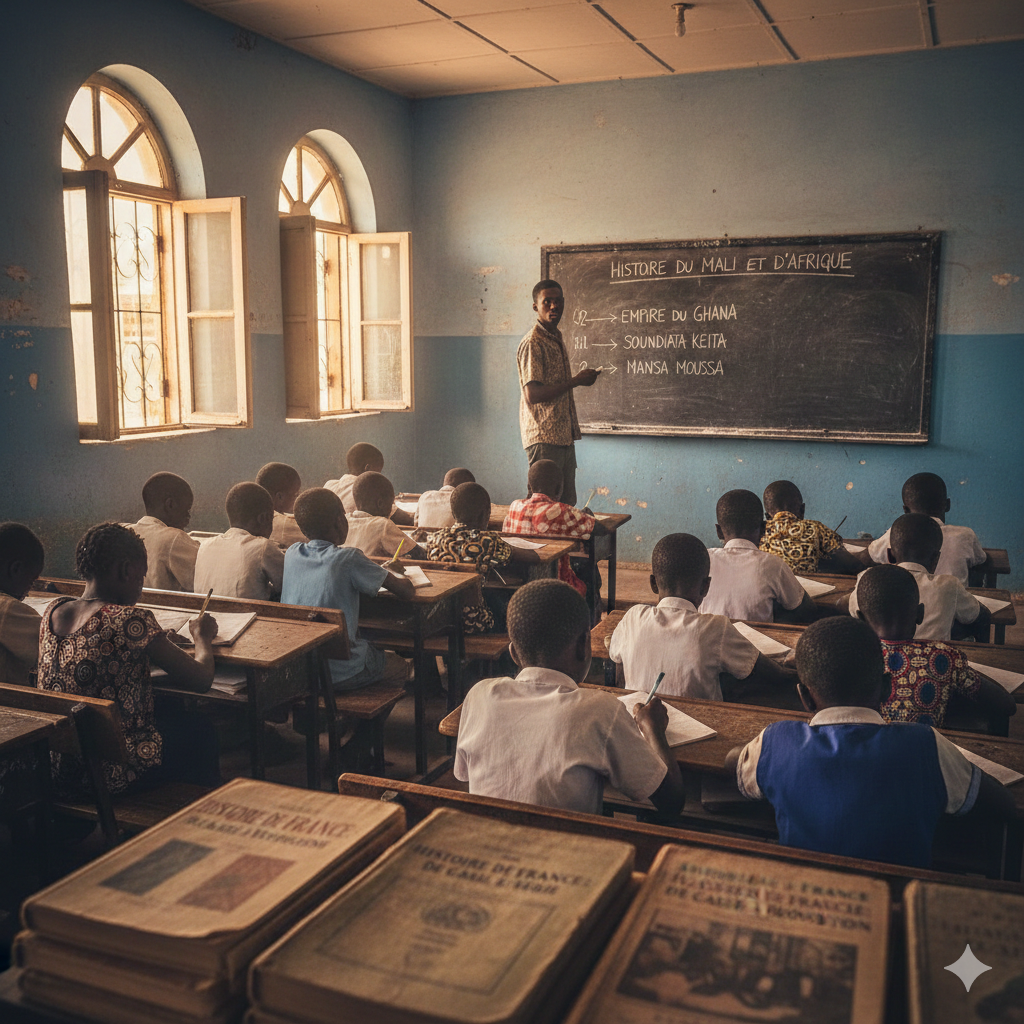
Bamako, Mali – Three months after the Malian Ministry of Education abruptly halted lessons on the French Revolution, the nation’s classrooms have become the front lines of a “mental decolonization” project. While the government celebrates a win for national sovereignty, the reality on the ground is a mix of high-energy patriotism and logistical chaos.
The “Sovereign” Classroom Since the October 9, 2025 directive, 9th-grade history books have been effectively redacted. In place of the 1789 storming of the Bastille, students are now diving into the legacy of the Mali Empire and the strategic brilliance of Samory Touré. For many students, the change has sparked a newfound interest in school. “We are finally learning about our own kings, not just people from a country we’ve never seen,” says one student in Bamako.
Authorities and the “Sanction” Strategy Education officials are leaving little room for dissent. The Ministry has warned that any teacher continuing the old “Eurocentric” curriculum will face strict sanctions. This hardline stance is part of a broader push that includes the recent removal of French as the sole official language and a pivot toward partnerships with Russia and regional neighbors.
The Teachers’ Dilemma Despite the enthusiasm, school authorities admit to a massive “resource gap.” Teachers are currently forced to create their own materials from scratch or rely on oral history and many educators, trained in the French academic tradition, are struggling to master the deep complexities of pre-colonial African history without formal retraining.
On top of all this, the transition coincides with a fuel crisis and the suspension of state subsidies for some private schools, making the “sovereign turn” an expensive and difficult climb for the average educator.
However, Malian classrooms are undergoing a massive “hero swap.” To replace figures like Napoleon Bonaparte and Robespierre, the curriculum is now prioritizing legendary figures from West Africa’s own golden ages and its resistance against colonial expansion.
They now focus on Malian colonial resistance heroes in such books as
The Empire Builders – Sundiata Keita (The Lion King): The founder of the Mali Empire. Students are now spending significant time on the Kouroukan Fouga, the oral constitution he established in 1235, which some Malian scholars argue is one of the world’s earliest declarations of human rights.
Mansa Musa, renowned as the wealthiest person in history, his 14th-century pilgrimage to Mecca and his transformation of Timbuktu into a global hub for science and Islamic scholarship are also being taught as evidence of pre-colonial African sophistication.