
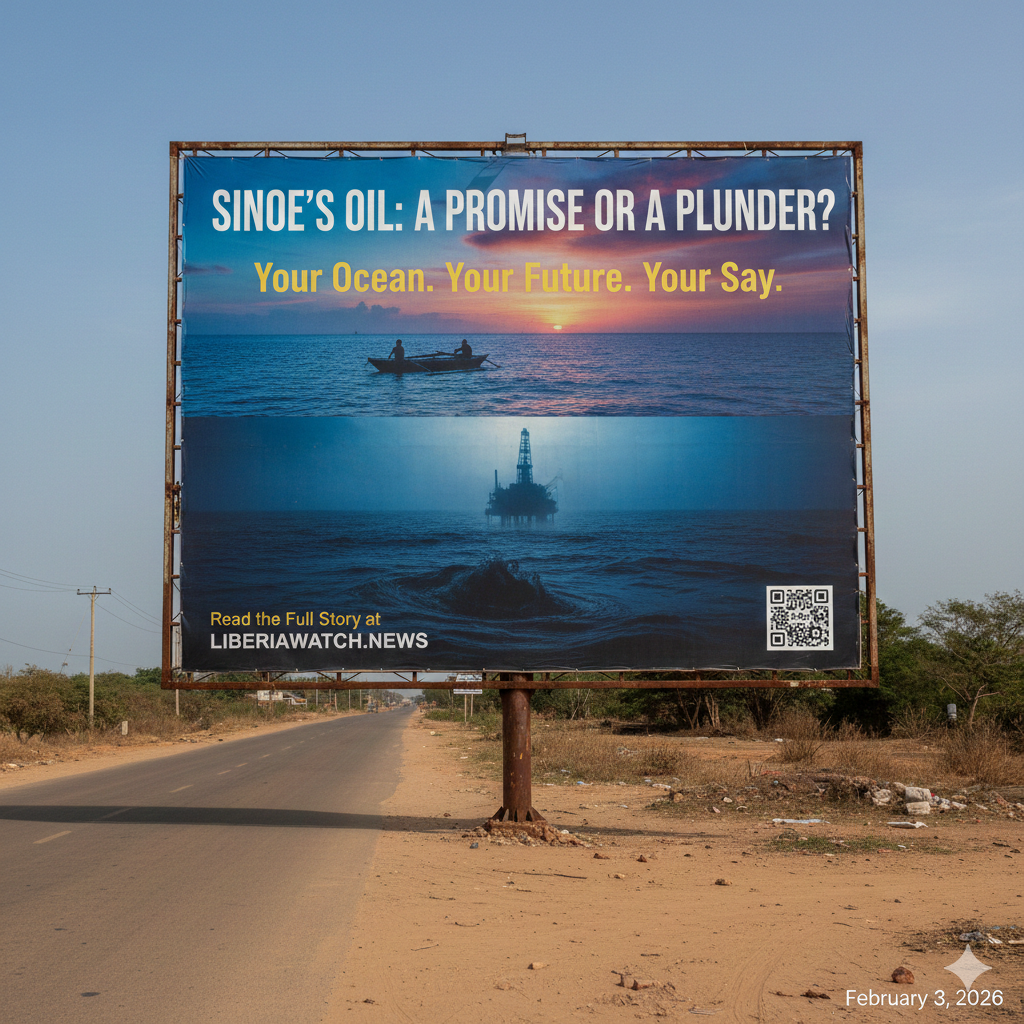
by CPNTV
GREENVILLE, LIBERIA — For decades, the waves crashing against the shores of Sinoe County have been the lifeblood of local fishermen. Now, those same waters have become the center of a billion-dollar debate that has reached the highest levels of the Liberian government.
As of early 2026, the Boakai administration has moved full speed ahead with a plan to revive the nation’s “dormant” oil sector. At the heart of this push are eight massive offshore blocks, several of which sit directly off the coast of Sinoe and neighboring counties.
The Big Deals
The government recently finalized agreements with two major players: TotalEnergies (France): Secured four blocks (LB-6, LB-11, LB-17, and LB-29) and Oranto Petroleum (Nigeria): Secured four blocks (LB-15, LB-16, LB-22, and LB-24).
Together, these deals represent a potential $800 million investment. The government says this money will build schools, pave roads, and finally give Liberians a share of the “black gold” wealth seen in neighboring countries like Ghana.
“We Are Being Exploited”
But on the ground in Sinoe, the mood is far from celebratory. Many citizens feel they are being left behind. Sinoe County Senator Crayton Duncan has emerged as a fierce critic, recently calling the country’s mineral laws “unfair.”
“The current law benefits companies more than the country,” Senator Crayton Duncan said in a January 2026 radio interview. He argued that the 5–10% royalty rates are too low, famously claiming that multinational corporations are “stealing” the nation’s wealth while locals remain in poverty.
Environmental Fears
For the people of Greenville, the concerns are not just about money—they are about survival. Local fishing communities worry that offshore drilling will:
- Pollute the Water: Spills could destroy the fish stocks that feed thousands.
- Harm Livelihoods: Deep-sea rigs could block traditional fishing grounds.
- Worsen Erosion: Sinoe’s coast is already disappearing into the sea; many fear industrial activity will speed up this process.
The Path Ahead
The government insists these new contracts include “strict environmental safeguards” and funds for training Liberian workers. However, civil society groups like LEW-WATCH have warned that without more transparency, these oil blocks risk becoming “speculative assets” for foreign firms rather than a benefit for the people.
As exploration ships begin to appear on the horizon, the people of Sinoe are watching closely. For them, the question isn’t just whether there is oil under the seabed—it’s whether any of that wealth will ever make it to the shore.