
by Rocheford T. Gardiner
“Does free speech hand in the balance?”

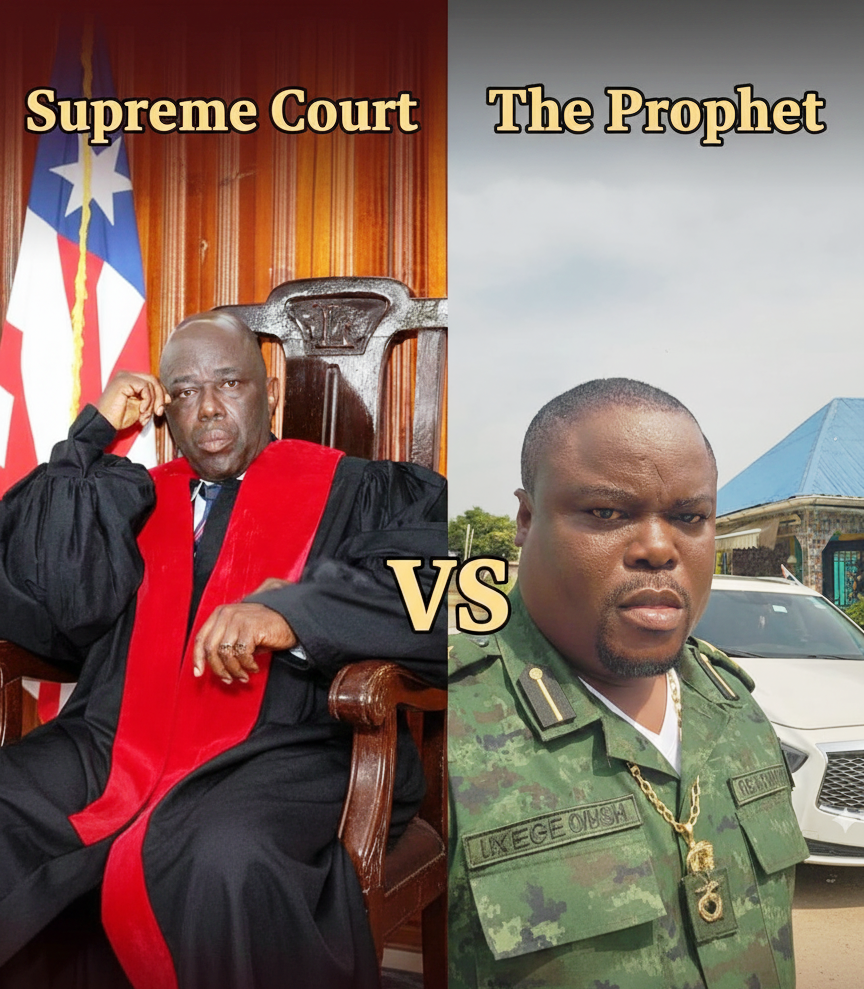
MONROVIA – In a move that has reignited the debate over the boundaries of digital free speech, the Supreme Court of Liberia has formally summoned popular social media podcaster and political commentator Justin Oldpa Yeazehn, famously known as “Prophet Key,” to appear before the Full Bench on Tuesday, February 10, 2026.
The writ of contempt, issued on February 4, cites Yeazehn for a “continuous and sustained barrage of invectives” directed at Chief Justice Yamie Quiqui Gbeisay and the high court itself. The judiciary alleges that Yeazehn’s broadcasts have exposed the nation’s highest legal body to “public ridicule and disrepute.”

The Legal Tug-of-War: Freedom of Speech or Judicial Order?
The summons has sent shockwaves through the Liberian media landscape, raising critical questions about Article 15 of the Liberian Constitution, which guarantees freedom of expression.
- The Argument for Free Speech: Supporters of the podcaster argue that social media commentators serve as a necessary check on power in a country where the judiciary is often perceived as insulated from public criticism.
- The Argument for Judicial Dignity: Legal scholars point out that while speech is free, it is not “absolute.” Under Liberian law, “constructive contempt” is often used to penalize speech that is deemed to undermine the authority of the court or interfere with the administration of justice.
Critics argue that the frequent use of contempt charges against media figures could have a “chilling effect” on journalism, potentially being used as a tool to silence dissent rather than to protect the law.
The Thin Line: Possible Abuse of Judicial Powers
International and local rights groups have previously expressed concern over the Supreme Court’s use of “contempt of court” to penalize critics. Historically, Liberia has seen cases where lawyers and journalists were disbarred or jailed for critical observations.
The “abuse of power” argument rests on the fact that in contempt cases, the Supreme Court acts as the accuser, the prosecutor, and the judge simultaneously. With no higher body to appeal to, many fear that this power—if used aggressively—strips citizens of their right to a neutral trial, effectively making the Bench “untouchable” by public opinion.
A Pattern of Conflict: The Juli Endee Saga

This is not Yeazehn’s first brush with the law involving high-profile public figures. In early 2024, he was embroiled in a fierce legal battle with Ambassador Juli Endee, Liberia’s prominent Cultural Ambassador and traditional icon.the “Prophet” was charged with Criminal Coercion, Menacing, and Disorderly Conduct. Endee sued for US$5 Million in damages after Yeazehn accused her of using sexual favors to maintain her government position.
A Writ of Arrest was issued; Yeazehn was briefly detained and placed under travel restrictions (Writ Ne Exeat Republica). However, in a surprising turn, Amb. Endee eventually dropped all charges in February 2024, citing a plea of noli prosequi due to “insufficient evidence” to proceed at that moment.
“Regardless of one’s status, everyone’s rights have limits, and respect for others’ rights is paramount,” Amb. Endee stated at the time, echoing the sentiments currently being expressed by the Supreme Court.
What’s Next?
Prophet Key has publicly acknowledged the citation on his platform, indicating he will appear at the Temple of Justice for the 3:00 p.m. hearing. If found guilty of contempt, he faces penalties ranging from a heavy fine to imprisonment—a verdict that would undoubtedly set a major precedent for the future of digital commentary in Liberia.
Free speech is one thing. Character assassins are a different breed.
Tanks for your feedback.