
by our Monrovia contributors
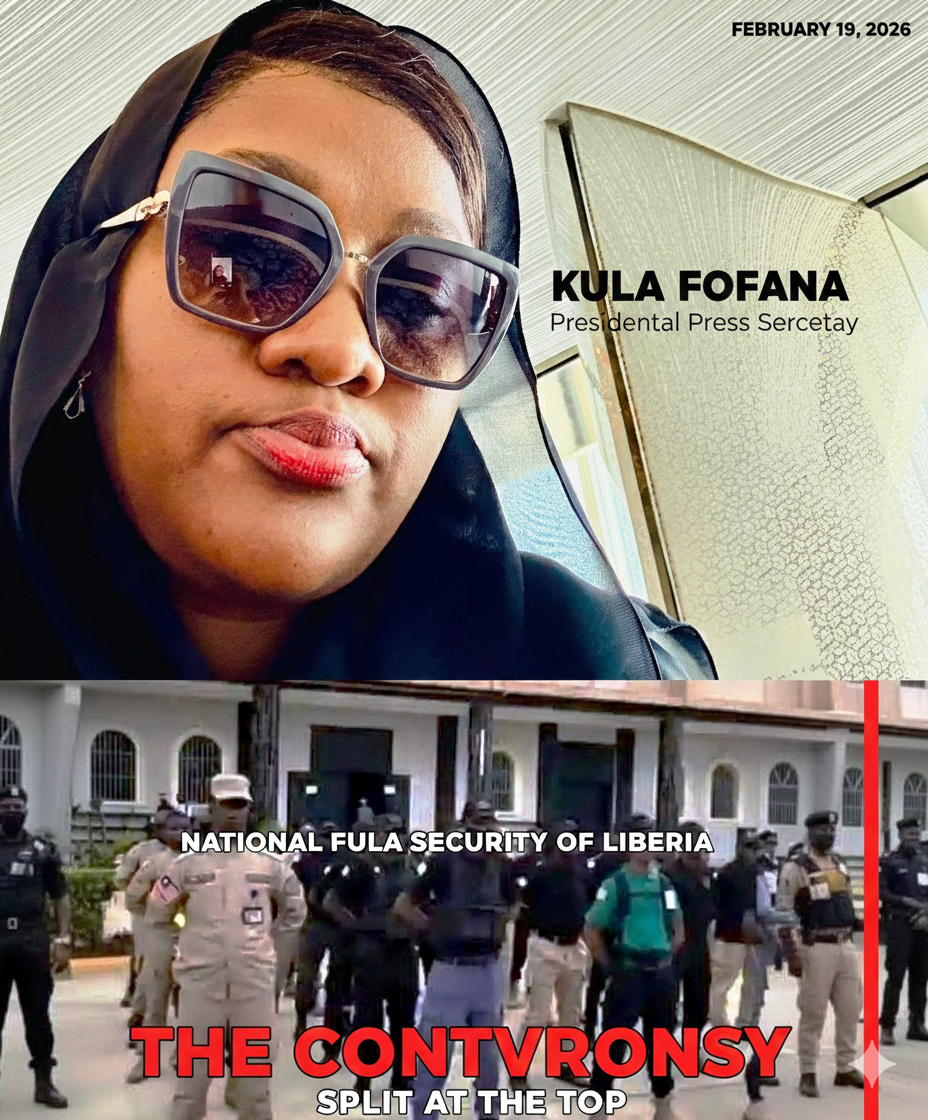
MONROVIA – what seems to be a public rift has emerged within the Boakai administration following the Ministry of Justice’s (MOJ) aggressive crackdown on a controversial community group, the National Fula Security of Liberia (NFSL).
While the government has officially labeled the group an “unauthorized tribal militia,” a high-ranking presidential aide has stepped forward to defend them, sparking a heated national debate over security, ethnicity, and administrative coherence.
The Crackdown: A “National Security Threat”
The controversy erupted early this week when the Ministry of Justice issued a “cease and desist” order against the NFSL. The move was triggered by viral social media footage showing dozens of men in coordinated drills and security-style uniforms.
In a stern statement, the MOJ declared that no permit or operational license had ever been granted to the group. Justice officials emphasized that under Liberian law, the “monopoly of force” rests solely with the state.
“The Government will not tolerate the formation of unauthorized security structures, particularly those organized along ethnic, tribal, or sectarian lines,” the Ministry’s directive read, warning that any continued recruitment would face “the full weight of criminal sanctions.”
The Pushback: “Releasing the Accelerator”
In a move that caught many by surprise, Presidential Press Secretary Kula Fofana publicly broke ranks with the Ministry’s hardline stance. In a commentary titled “Releasing the Accelerator a Bit: The Fulani Security Saga,” Fofana argued that the group has been misunderstood.

According to Fofana, the NFSL is not a militia but a long-standing community volunteer group that provides crowd control during major Islamic events, such as Ramadan and Eid prayers. She noted that the group has historically cooperated with the Liberia National Police (LNP) to prevent stampedes during religious gatherings.
“Guidance is better than rejection,” Fofana stated, suggesting that instead of an outright ban, the government should focus on regulating and professionalizing such community initiatives.
A Nation Divided by History
The debate has struck a sensitive nerve in a country still healing from civil conflict. While some residents view the NFSL as a harmless community watch, others express deep anxiety over any security apparatus branded by a specific ethnic identity.
Security analysts have pointed to regional instabilities in West Africa, where similar “vigilante” groups have sometimes evolved into destabilizing forces. Critics argue that allowing one ethnic group to form a “national security” body sets a dangerous precedent that could encourage other tribes to follow suit, effectively fragmenting national security.
What’s Next?
The executive branch now faces growing pressure to clarify its unified position. With the Press Secretary and the Justice Minister offering conflicting narratives, the public is left wondering if the ban will be strictly enforced or if a path to “regularization” remains open.
Other critics of President Boakai are now citing “weakness” on his part – something they say is exposing the president’s “inability” to govern the country.
This incident, added to recent perceived “overreaches” by Police Director Gregory Coleman, is not going to help as President Boakai already stands accused of allowing Coleman to “have his way” and run his own little government.