
by George A. Prowd
Part 3: The Rise of a Visionary
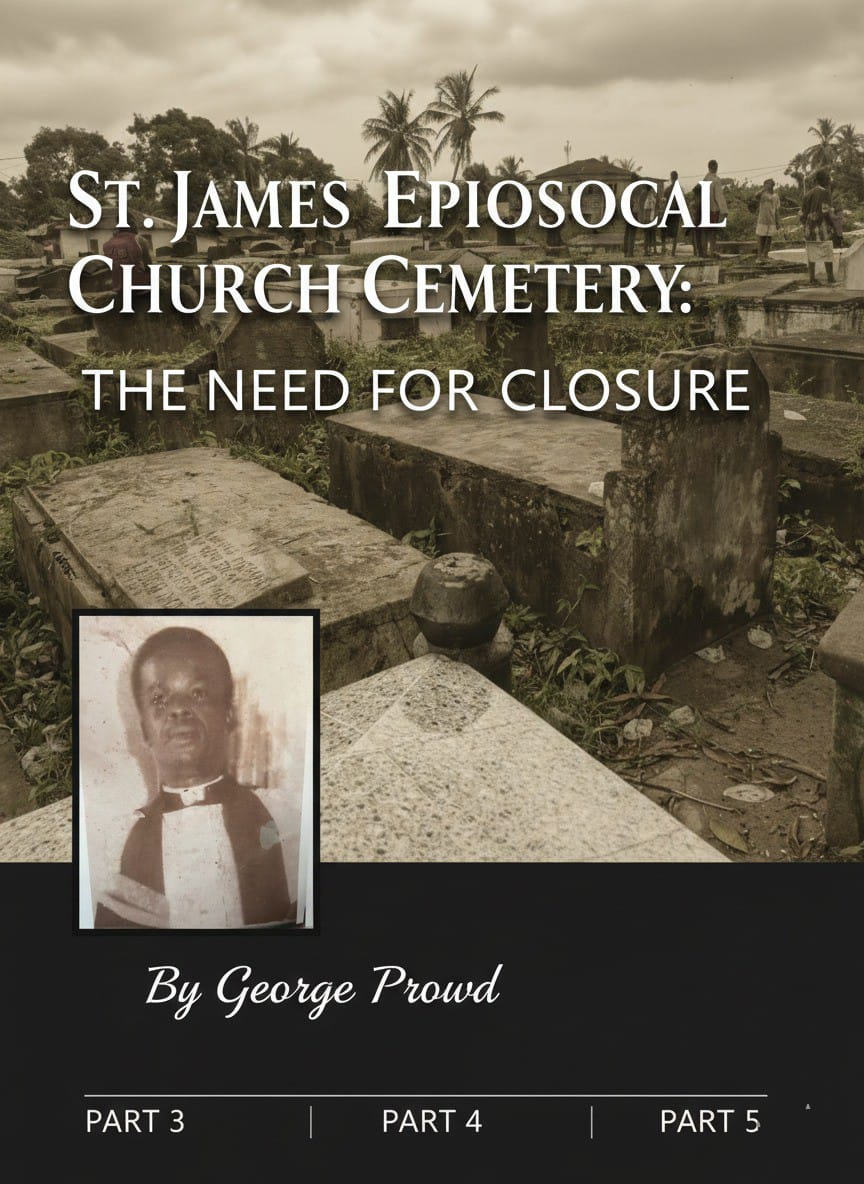
Born on January 1, 1932, in Barraken, Pleebo/Sodoken District, Maryland County, young William Sodo Newton emerged as a promising man with a glittering future. He moved to Hoffman Station at an early age and became a member of St. James Episcopal Church through his guardian, Gbar Yarba Allison.
Newton’s devotion was evident from the start. He served as an altar boy, sang in the choir, worked with the youth, and served as both a Sunday School teacher and a lay reader. His dedication was so widely admired that he was selected to travel to the United States in 1973 to undergo priestly education and training.
Upon his return in 1975, he served under Rev. Lee O.D. Mitchell until 1977, when he was ordained and assigned as the Priest-in-Charge of St. James Episcopal Church. Few realized then that this young priest would bring radical changes to both the church and the community—changes that would place him in direct conflict with the “old order” protected by the elders.
The primary point of contention was Newton’s decision to erase all family plots in the cemetery, allowing burial space to anyone who requested it. Offended by this, the elders summoned Rev. Newton to a meeting at the Big Town Public School for an investigation.
Elders in Attendance:
- H. Nyema Prowd, Sr. (The author’s father)
- Edward Poo Wle Dennis
- James Nyebe Wilson
- Teba Gahie Hodge
- Dudu Wle Wilson
- Yulo Wah Williams, and others.
Youth in Attendance:
- J. Gbede Dennis
- Joseph Gba Yebe Mle Williams
- Christian Wese Baker
- Ellie Howe
- Sia Wade Allison
- Wamu Dennis
- Kla Wlo Wilson, and others.
The meeting was heated, and the outcome remains controversial to this day.

Part 4: The Outcome of the Conflict
During the meeting, the elders expressed their strong dissatisfaction. They believed the cemetery should remain restricted to preserve spaces for their own eventual burials, arguing that the land was for the members of St. James Church, not “outsiders.”
Rev. Newton stood his ground, calling their restrictions “selfish and un-Christian,” arguing that such exclusion did not represent the core values of the missionary community. The exchange grew bitter; after being subjected to harsh words from several attendees, Rev. Newton walked out in anger.
The following month, on the first Sunday—the “D-Day” for the Priest-in-Charge to hand down rulings—the elders attended in full force. Rev. Newton addressed them directly:
“For those of you who called me to a meeting in the Big Town Public School to tell me about the old way of managing the graveyard… hear me today. If you are so worried about space for burial, drink ‘lasso’ (poison) and die now so we can bury you…
The graveyard is hereby declared open to all. All family plots are erased. This is my decision as Priest-in-Charge of St. James P.E. Church.”
Though the parents were annoyed, they respected the office of the priest, and the decision stood.
The Current Crisis Decades have passed. Due to the multitude of burials, the lack of organization in grave designs, and encroachment on cemetery land, there is no more space left. We now face a public health crisis involving odors, pollution, and potential disease outbreaks.
In a twist of irony, Rev. Newton ended up burying every one of those elders who had worried about space. My father was the last of his peers to pass. At each funeral, Newton would jokingly remind the families: “You were worried about space; well, we have found enough space for you today.”
Rev. William Sodo Newton was a controversial figure, but he was a catalyst for meaningful change. He passed away in 1999 at the age of 67.
Part 5: A Proposed New Site
Over five years ago, Township Commissioner Hon. I. Sumu Prowd and his Council negotiated with the people of Big Town for a new cemetery site. A large, suitable parcel of land was identified at the back of Hoffman Station in the Wa Hodo Town vicinity.

To finalize this arrangement, I suggest the following:
- Collaboration: The Township Council must involve St. James Church leadership in the final formalities.
- Naming: The new site should retain the name St. James Episcopal Church Cemetery.
- Management: A joint committee of the Church and Township Council should be established to oversee operations.
- Organization: The land must be professionally surveyed. To maintain order, there should be a uniform grave design and a strict chronological burial sequence (following the spot of the first grave).
- Preservation: The old cemetery should be fenced and maintained to honor our ancestors and preserve our history.
- Deadline: The formal closure of the old cemetery should be completed by December 2026.