

by Rocheford T. Gardiner
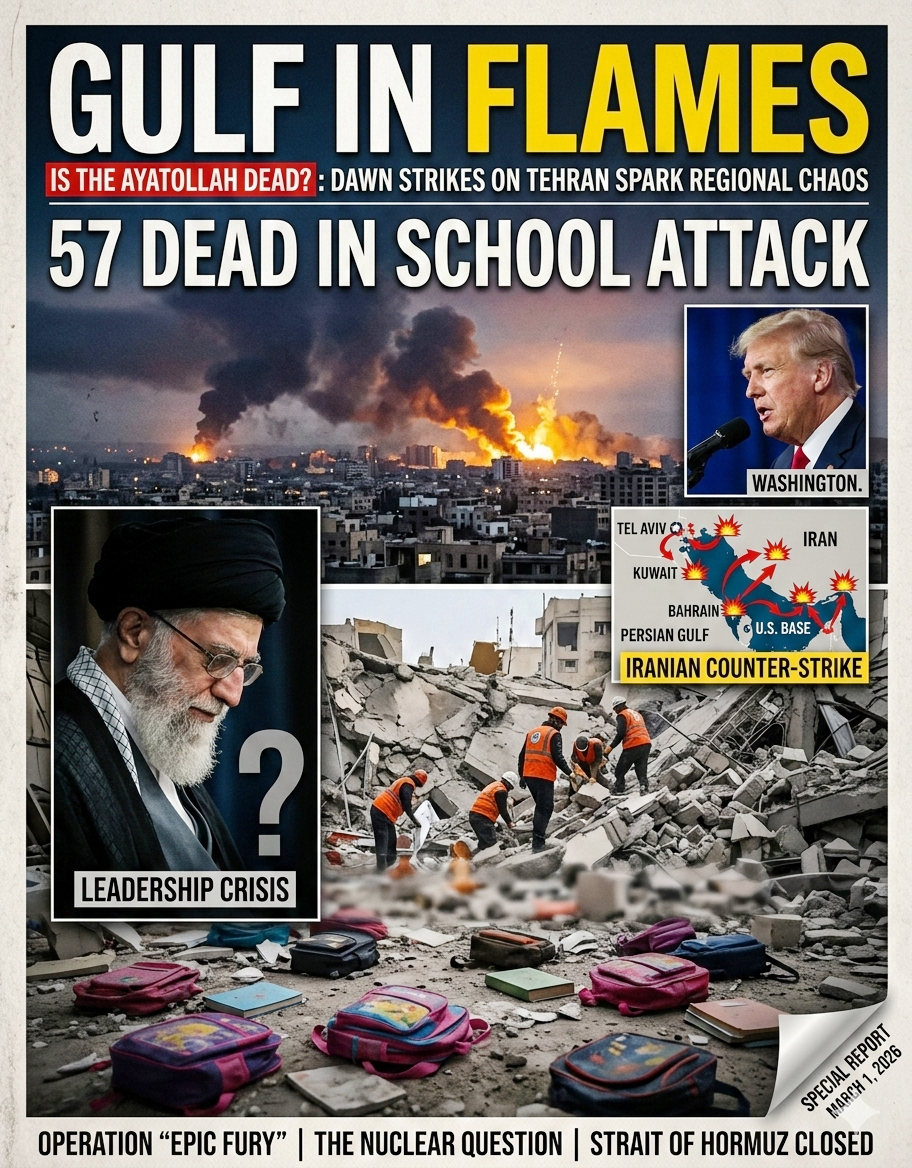
TEHRAN / WASHINGTON — As the dust begins to settle from a massive, joint U.S.-Israeli dawn offensive against the Islamic Republic of Iran, a picture of devastation and defiant rhetoric is emerging from the Persian Gulf. Operation “Epic Fury,” launched on February 28, has plunged the region into what experts call the most dangerous escalation in decades.

Reporting for CPNTV in Maryland County, Liberia, West Africa, Rocheford T. Gardiner brings the latest from the ground as the world watches the fallout of a campaign the Trump administration claims is aimed at “regime change” and neutralizing a nuclear threat.
Tragedy in Minab: 57 Schoolgirls Killed
The most harrowing report from the strikes comes from the southern city of Minab in the Hormozgan Province. Local authorities and the IRNA news agency confirmed that a strike—attributed to Israeli forces—directly hit the Shajareye Tayabeh girls’ school.
- Casualties: At least 57 girls have been confirmed dead.
- Search Operations: Provincial Governor Mohammad Radmehr stated that rescue teams are still digging through the rubble, with over 50 students still feared trapped or missing.
- Response: While the U.S. military stated it is “looking into reports of civilian casualties,” the imagery of schoolbooks and backpacks amidst the debris has already ignited a firestorm of condemnation across the Middle East.
Leadership Status: Conflicting Claims
In Washington, President Donald Trump took to social media to declare that Supreme Leader Ayatollah Ali Khamenei is dead, calling it the “single greatest chance” for the Iranian people to reclaim their country.
However, Tehran is pushing back hard. Iranian Foreign Minister Abbas Araghchi (referred to in some reports as Sarachi) spoke to western media outlets, including NBC News, dismissing the claims as “psychological warfare.”

“The Ayatollah and the President are very much alive and commanding the field,” Araghchi stated. “The leadership is intact and the aggressors will soon realize the gravity of their miscalculation.”
The Iranian Counter-Strike: “A Hard Lesson”
Tehran has not remained silent. Invoking the right to self-defense under international law, the Islamic Revolutionary Guard Corps (IRGC) launched a barrage of ballistic missiles and drones targeting:
Israel: Missiles reached Tel Aviv, resulting in at least one confirmed death.
- U.S. Assets: Strikes were reported near U.S. naval bases in Bahrain and military installations in Kuwait, Qatar, and the UAE.
- Regional Hubs: Dubai International Airport was forced to suspend operations after missile activity in the area.
Araghchi emphasized that Iran stands alone by choice, claiming they “don’t have proxies” and currently require no outside help to defend their sovereignty. He promised to “teach the aggressors a hard lesson” that would resonate for generations.
The Nuclear Question: A Crisis of Trust
The central justification for Operation Epic Fury remains Iran’s nuclear ambitions. Despite recent claims by Omani mediators that a “breakthrough” was near, the U.S. administration argues that Tehran has used diplomacy as a smokescreen.
Why should the world trust Iran? Critics of the Iranian regime point to a history of “clandestine enrichment” and the recent refusal to allow full, unfettered IAEA inspections. While Tehran maintains its program is for peaceful energy, the U.S. and Israel contend that the window to prevent a nuclear-armed Iran had officially closed, necessitating the weekend’s “preemptive” strikes.
Current State of Affairs
As of March 1, 2026, the Persian Gulf remains a “no-go” zone for civil aviation and commercial shipping. The Strait of Hormuz is effectively closed, and oil prices have begun a volatile climb.