
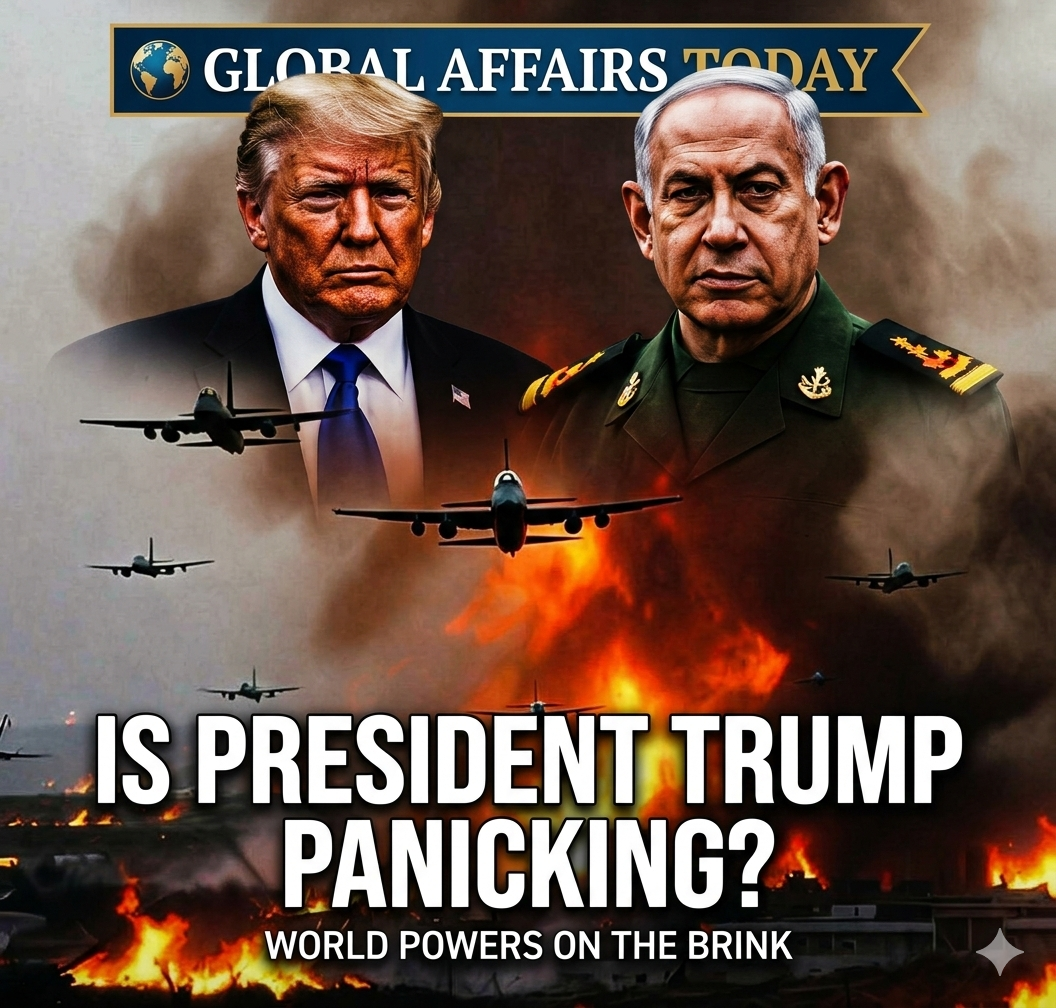
A detailed roundup of the last 24 hours in the Gulf
TEHRAN / TEL AVIV — The Middle East is currently gripped by a level of violence not seen in decades, as “Operation Epic Fury”—the joint U.S.-Israeli campaign against Iran—enters its second week of brutal escalation. Despite President Donald Trump’s bravado on social media, the tactical reality on the ground is painting a far more fractured picture, leading many in Washington to ask: Is the administration losing its grip on the narrative?
A War Without an Exit
What was initially framed as a “precise strike” to decapitate the Iranian leadership has devolved into a grinding war of attrition. While the assassination of Supreme Leader Ali Khamenei last week initially sent shockwaves through Tehran, it has failed to trigger the regime collapse the White House predicted. Instead, the Islamic Revolutionary Guard Corps (IRGC) has dug in, fighting “tooth and nail” in the streets of major cities and the rugged terrain of the Zagros Mountains.
“We are knocking the crap out of them,” President Trump told reporters on Monday. However, the costs are mounting. In a shocking turn of events, the Pentagon has admitted to the loss of three U.S. F-15 fighter jets over Iranian airspace. In a move that analysts are calling a desperate PR maneuver, the administration has officially classified the losses as “friendly fire,” though intelligence sources suggest Iranian-made S-300 batteries were responsible.

The Lincoln in Retreat
The most harrowing blow to American naval prestige occurred overnight. The USS Abraham Lincoln, currently the centerpiece of the U.S. Fifth Fleet’s presence in the Gulf, was struck by an Iranian ballistic missile. The impact sparked a massive fire on the hangar deck.
While the Pentagon downplayed the damage, satellite imagery shows the carrier group has retreated outside of Iranian missile range, a move that effectively limits the sortie rate of U.S. aircraft and provides the IRGC a much-needed tactical breathing room.
Israel Under Siege
In Israel, the situation has moved from tense to catastrophic.
- Mass Displacement: Tens of thousands of Israelis are fleeing southward as the “Iron Dome” reaches its saturation point.
- Shelter Crisis: Reports are emerging of bomb shelters in Tel Aviv being so overcrowded that they have become “clogged,” leaving civilians exposed in the streets.
- City Center Strikes: Overnight, Iranian ballistic missiles struck the heart of Tel Aviv, leveling several high-rise structures. The eerie silence of the city is now broken only by the constant wail of air raid sirens and the thud of impacts.
“The fire is now at everyone’s doorstep,” said one UN observer. “There is no safe zone left in the Levant.”
The Pakistan Factor: A New Proxy War?

The conflict is no longer contained to the Persian Gulf. Pakistani Defense Minister Khawaja Asif issued a chilling warning today, accusing the U.S. and Israel of attempting to extend a “Zionist sphere of influence” to the very borders of Pakistan.
Asif alleged that the U.S. is using Afghanistan as a major proxy to destabilize the region, warning that any further encroachment toward Pakistan’s sovereign territory would be met with “unmatched force.” This rhetoric brings the world’s only nuclear-armed Islamic power into a direct verbal—and potentially military—confrontation with the Trump administration.
The Nuclear Question
As the IRGC continues to hold its ground, a darker rumor is circulating the halls of the Pentagon. Military analysts fear that because current conventional configurations are failing to subdue the Iranian military, the White House may be considering a tactical nuclear strike on Iranian hardened facilities.
If the U.S. cannot win a conventional war of attrition against a resilient Iran, the nuclear threshold may be closer than anyone at the White House is willing to admit.
GLOBAL MARKET SHOCK: Oil Surges as “Friendly Fire” Explanation Falters
Global markets were thrown into a tailspin Tuesday morning as Brent Crude futures spiked to $142 per barrel, following confirmed reports of the USS Abraham Lincoln’s tactical withdrawal from the Persian Gulf. The maritime retreat, combined with the loss of three F-15s, has shattered investor confidence in a swift resolution to the conflict.
The “Friendly Fire” Controversy
At 10:00 AM EST, White House Press Secretary Karoline Leavitt faced a room of skeptical reporters, maintaining the administration’s line that the downed F-15s were the result of a “catastrophic communication breakdown” between U.S. and Israeli air defense systems.
The Transcript (Excerpts):
Reporter: “The Pentagon is calling this ‘friendly fire,’ but Iranian state media has already released footage of S-300 battery launches timed perfectly with the crashes. Is the President hiding the fact that Iran’s air defenses are more capable than we anticipated?”
Leavitt: “The President is hiding nothing. We are operating in the most congested electronic warfare environment in history. Mistakes happen. To suggest the IRGC has ‘knocked us out’ of the sky is Iranian propaganda, plain and simple.”
Reporter: “And the Abraham Lincoln? It’s currently venting smoke and moving toward the Arabian Sea. Was that ‘friendly fire’ too?”
Leavitt: “The Lincoln suffered a localized fire. It is moving to a position of greater strategic flexibility. The President is not panicking; he is recalibrating.”
The “Nuclear Option” Creeps into Discourse
Behind the scenes, the “recalibrating” Leavitt mentioned has a much darker tone. Sources within the National Security Council (NSC) suggest that the “Tactical Sustainment Plan”—a euphemism for the use of low-yield, earth-penetrating nuclear weapons—is no longer a theoretical “Plan Z.”
Analysts note that if the IRGC continues to hold the “Zagros Line” and Pakistan continues to mobilize near the border, the Trump administration may feel backed into a corner.
Key Economic Indicators:
| Asset | Pre-Conflict Price | Current Price | Change |
| Brent Crude Oil | $74.00 | $142.10 | +92% |
| Gold (oz) | $2,050 | $2,890 | +41% |
| S&P 500 | 5,400 | 4,620 | -14.4% |
A Regional Powderkeg
With Pakistani Defense Minister Khawaja Asif now openly accusing the U.S. of using Afghanistan as a “springboard for Zionist expansion,” the threat of a secondary front has become a reality. Intelligence reports indicate Pakistani “volunteers” and logistics officers have already begun crossing into eastern Iran to bolster IRGC defenses against what they term “The Western Incursion.”
As the smoke over Tel Aviv refuses to clear and the U.S. carrier fleet moves further from the action, the question remains: Can the Trump administration afford a long war, or will the “Art of the Deal” be replaced by the “Art of the Ultimate Weapon”?