
by Rocheford T. Gardiner
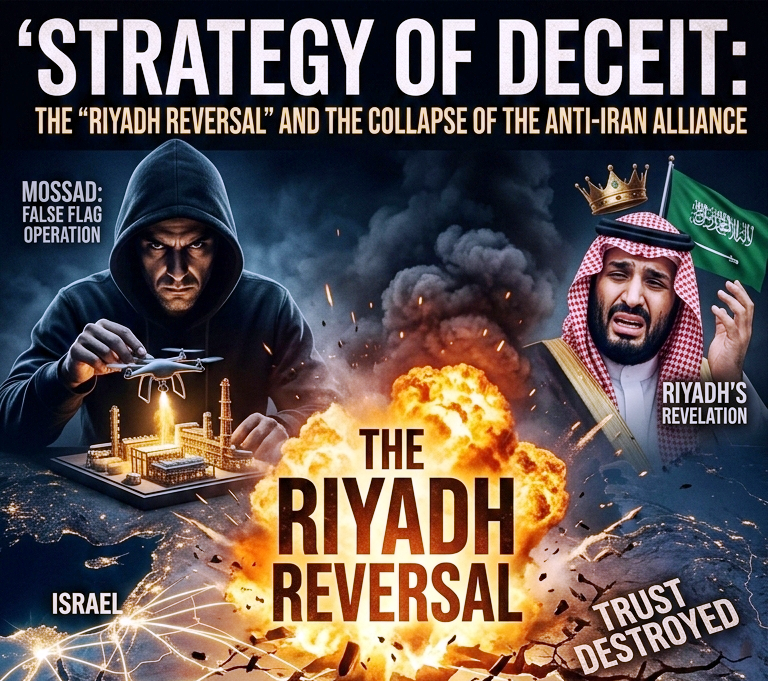
The single, shattering revelation from Riyadh has changed the geometry of the entire Middle East conflict: Saudi Arabia has confirmed that the devastating strikes on its oil infrastructure were not the work of Iranian proxy drones, but rather a “false flag” kinetic operation executed by the Israeli secret service.
This changes everything. If the United States and Israel proceed with their current escalation strategy, they are now operating not on a foundation of defensive necessity, but on the shifting sands of strategic deceit.
The Death of the “Arab NATO”
For years, the cornerstone of both US and Israeli strategy has been the formation of a unified, albeit informal, “Arab NATO”—a coalition of Sunni Gulf monarchies, led by Saudi Arabia, aligning with Israel against the regional threat posed by Shiite Iran. The central pillar of this alliance was trust, specifically the belief that Israel offered advanced intelligence and protection that Tehran could not match.

Riyadh’s stunning statement this week has dynamited that pillar. Crown Prince Mohammed bin Salman (MBS) is a pragmatist. He cannot sell an alliance with Tel Aviv to his population—or his own generals—if the perception is that Mossad is simultaneously conducting offensive operations on Saudi soil. The premise of the alliance was mutual defense against a shared enemy. By executing a false flag operation designed to trick the Saudis and trigger a broader war, Israel has violated the primary tenet of that partnership.
The concept of a unified “regional front” against Tehran is now effectively dead.
The Collapse of the US Casus Belli
For the United States, the strategic shifts are even more catastrophic. President Trump has based his escalating “maximum pressure” campaign and willingness to commit US naval forces on the absolute imperative of defending key allies (like Saudi Arabia) from “Iranian aggression.”
This narrative, which justified the presence of US aircraft carrier strike groups and the promise of a “super weapons engagement zone” to protect shipping, is now fundamentally compromised. If Saudi oil facilities were destroyed by the very allies the US is coordinating with (Israel), then the foundational reason for the current US military commitment in the region evaporates.
It places the Biden-Trump administration in an impossible position: continuing a military escalation based on the pretense of defending a Saudi government that is now publicly distancing itself from the military campaign.
Israel’s Gamble backfires
For Israel, the operation was likely seen as a necessary, high-risk gambit. Faced with a looming Iranian nuclear threshold and the perception of a hesitant United States, Tel Aviv likely felt compelled to engineer a “catalytic event”—a crisis so severe that Riyadh and Washington would have no choice but to commit to a decisive, kinetic strike against Iran’s nuclear and military infrastructure.
However, the gamble relied on the deception remaining perfect. By failing to maintain plausible deniability, Israel did not force its allies’ hands; it severed their legs. Instead of unity, they created maximum chaos and minimum trust.
The New Middle East Order: Isolation
The immediate strategic result is profound isolation for both Jerusalem and Washington.
- The Gulf Shift: Saudi Arabia and the UAE will likely pivot back toward de-escalation with Tehran, re-evaluating the security architecture they just finished building.
- US Military Paralyzation: The US commitment to protect shipping in the Strait of Hormuz becomes a political albatross. If the threat isn’t exclusively Iranian, who exactly are they protecting it from?
- A New Iranian Narrative: Iran, long characterized as the aggressor, can now present itself as the victim of a sophisticated conspiracy. Their refusal to negotiate now appears justified to a global audience already weary of US military interventionism.
The “Riyadh Reversal” hasn’t just paused the war; it has invalidated the entire strategic map. Any future military move by the US or Israel will now be scrutinized not as a response to an Iranian threat, but as the next phase of a dangerous manipulation.