
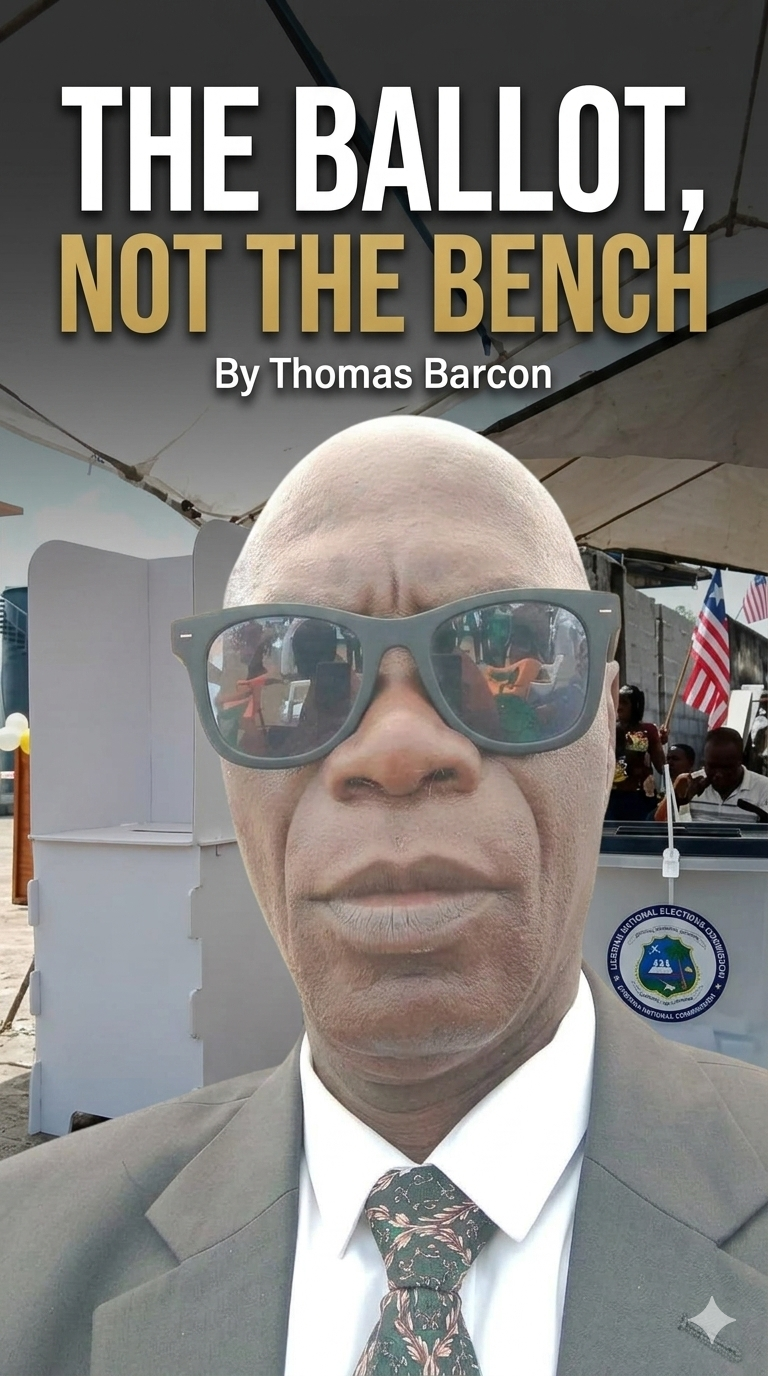
by Thomas Barcon
There is a growing conversation around the “Negro Clause” of the Liberian Constitution—Article 27. For some, it is a sacred shield of national identity; for others, an outdated barrier to dual citizenship and foreign investment. But regardless of which side you lean on, there is a fundamental legal reality that often gets lost in the noise: This is not a decision for politicians to make.
Under the current framework of our democracy, neither the President, the Legislature, nor “mouth talk” in the streets can unilaterally alter the requirements for citizenship. Here is why the path to change begins and ends at the ballot box.
The Constitutional Guardrail
Article 27 is entrenched. It isn’t a simple policy or a standard law that can be edited during a late-night session in Parliament. Because it defines the very fabric of who we are as a people, the power to change it is reserved exclusively for the citizens of Liberia.
The Only Path Forward: A National Referendum
To amend or remove Article 27, the National Elections Commission (NEC) must conduct a formal National Referendum. This process follows a strict democratic hierarchy:
- Legislative Proposal: Two-thirds of both the House of Representatives and the Senate must agree to put the question to the people.
- Public Education: The NEC must ensure voters understand exactly what they are being asked to decide.
- The Polls: Every registered Liberian must have the opportunity to cast their vote.
- The Resultant Will: Only a two-thirds majority of the people’s votes can legally transform the Constitution.
Why This Matters
It is easy for advocates of dual citizenship or “non-Negro” citizenship to seek shortcuts through judicial rulings or executive orders. However, any change made outside of a referendum would lack the constitutional legitimacy required to stand the test of time.
If we want to settle the debate on Article 27 once and for all, we must stop looking to the halls of Parliament and start preparing for the will of the people. Real change in Liberia isn’t granted by the government; it is decided by the voters at the polls.