
by Rocheford T. Gardiner
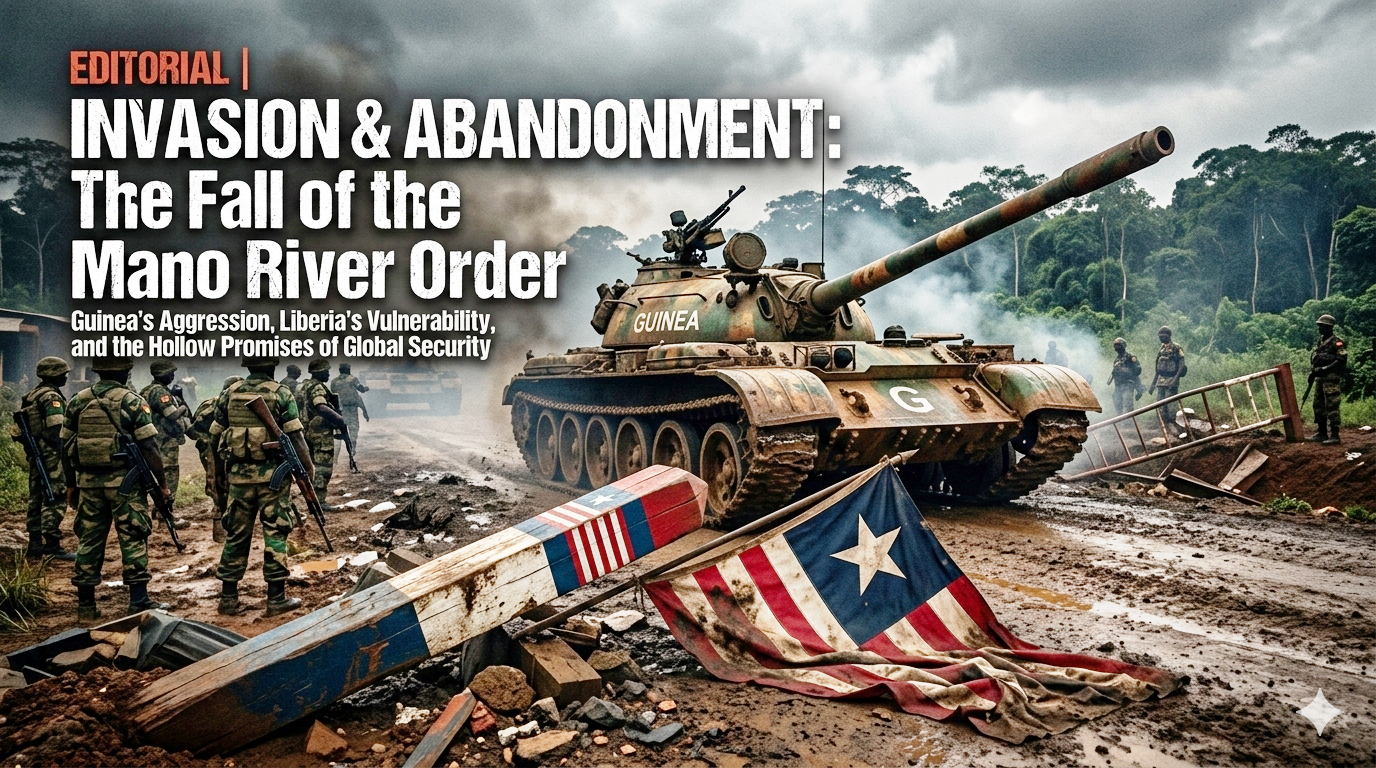
In less than a month, Guinea has invaded two of its neighbors: first Sierra Leone, and now Liberia. All indications suggest the root cause is a hollow display of military might, fueled by the deployment of Soviet-era tanks—relics acquired from Cuba during the Cold War standoff between Fidel Castro and the United States.
One must wonder where such audacity and lawlessness originate. To whom can the victims of this aggression turn? In the modern era, the “architects” of global security are often the very same actors violating their own standards. Before the apparent collapse of the international order—a system intended to abolish the “law of the jungle” and protect the sovereignty of smaller nations—Guinea would not have dared such a provocation.

Liberia was once a progenitor of peace, unity, and self-determination in Africa. Highly respected on the international stage, Liberia wielded significant influence within the United Nations and the Organization of African Unity (now the African Union). Other nations sought her counsel, and she was instrumental in resolving crises across the continent.
Today, however, a “baby sister nation” like Guinea feels emboldened to send armed troops across the border to de-hoist the Liberian flag, relocate border markers, and seize property. This is more than disrespect; it is an act of hooliganism—unfortunate, lawless, and highly immature on the part of the Guinean military government.
The Failure of Global Policing
Sadly, the major powers tasked with “policing” world rules are flagrantly disregarding them. It is difficult not to draw a line between the recent actions of the United States in Venezuela and the emboldening of a renegade government in Guinea. To add insult to injury, the UN has been rendered a toothless bulldog. Sanctions and punitive measures are now applied only when they align with the interests of “Big Powers.” Consequently, small nations are left with a grim choice: swear allegiance to “Uncle Sam” or face the consequences alone.
A History of Vulnerability


The total unpreparedness of the Armed Forces of Liberia (AFL) is a critical factor. Following the 1997 elections that brought Charles Taylor to power, the international community reneged on its commitment to rebuild the army. The U.S., Liberia’s “traditional ally,” refused to engage with the Taylor administration.
Eventually, a new insurgency was launched against Liberia—from Guinea. Overwhelming evidence suggested that the rebels of LURD (Liberians United for Reconciliation and Democracy) received tacit support from the U.S. and the UK in the form of training and intelligence under the watch of then-President Lansana Conté.
By 2003, after the U.S. forced President Taylor’s resignation (as they did to President E. J. Roye), a UN peacekeeping force was deployed with a mandate to rebuild the security sector. Yet, under President Ellen Johnson Sirleaf, the only significant changes were cosmetic—the adoption of “NATO standard ranks” for the army and police. It appeared a deliberate choice to keep the military small and underfunded; today, the AFL remains fewer than 2,000 men strong, with desertion a common occurrence.
As Guinea continues its “Mano River military exhibition,” Liberia and Sierra Leone find themselves at the mercy of absolute lawlessness. With the “world policemen” busy bullying others, these nations are left vulnerable to the barbarism of a neighbor emboldened by a crumbling global order.