
by Rocheford T. Gardiner
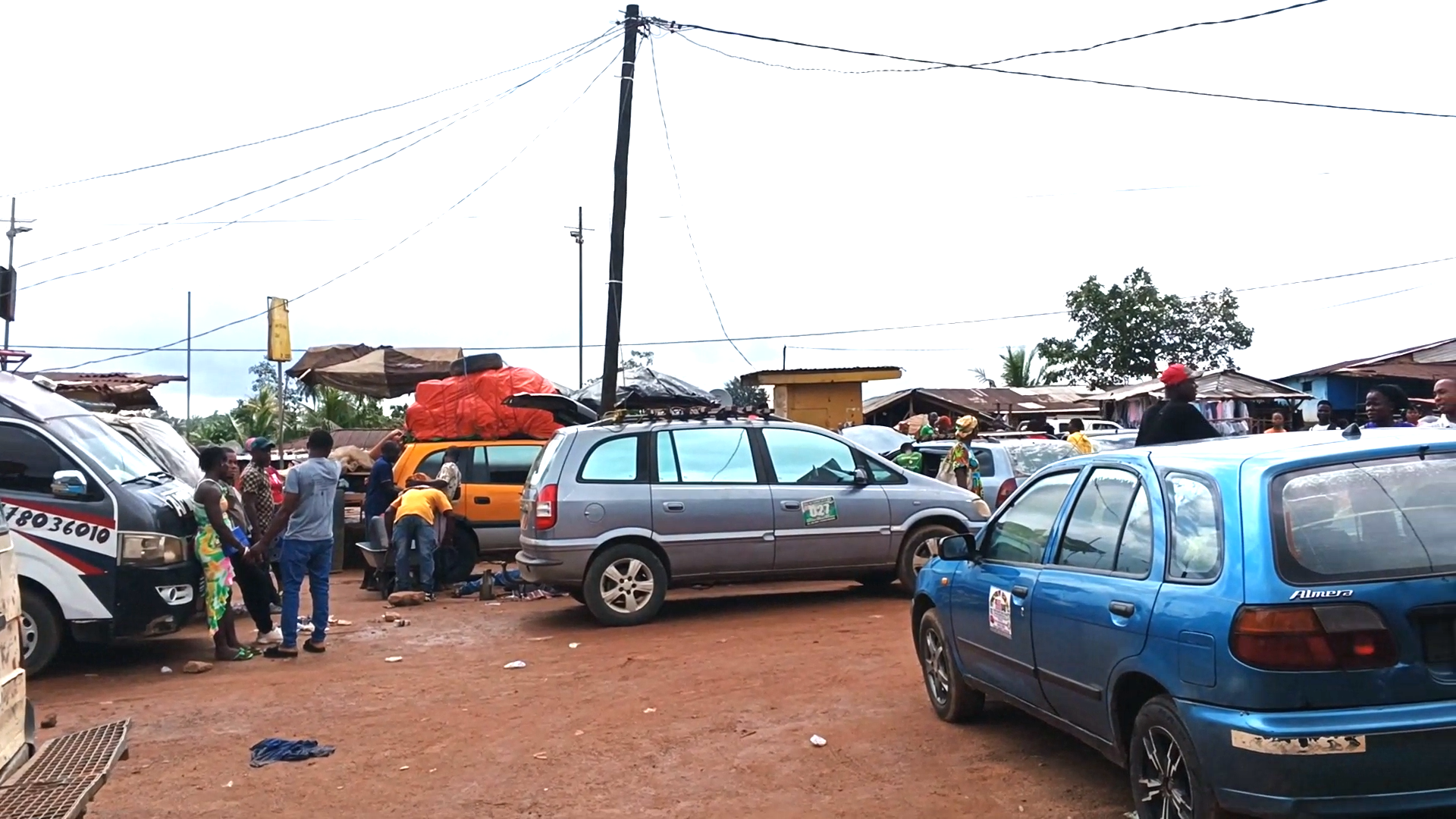
Commercial drivers in Maryland County have once again raised serious concerns over alleged harassment and extortion by the Liberia Joint Security.
Allegations of Extortion at Checkpoints
Speaking over the weekend from his office in Pleebo, Leyee Kamara, President of the ECOWAS Drivers’ Union, stated that his colleagues are routinely being forced to pay at least LD$500 at each checkpoint. This, he says, is leading to significant losses in their profit margins.

Mr. Kamara added that the excessive number of checkpoints along the Harper-Monrovia route is compounding the issue. Each checkpoint is staffed by personnel from various units of the Liberian security sector, including the Liberia Drugs Enforcement Agency (LDEA), Forestry Development Authority (FDA), Liberia National Police (LNP), Fire Service, and Liberia Immigration Service (LIS). He claimed that each of these agencies demands separate, illicit charges.
“Failure to comply with their demands,” Kamara continued, “you will be required to offload all your payload.” He said the primary threat from the Joint Security—especially the LDEA—is “illegal possession of drugs,” a tactic they use to intimidate the drivers.
This threat, coupled with the “arduous task of offloading a whole car which has been carefully packed from Monrovia,” leaves drivers with no option but to pay whatever the Joint Security demands. Wondering aloud about the high number of roadblocks, Kamara questioned, “And we are not fighting war. Why are there so many checkpoints?”
Together, the Union President and I counted approximately ten checkpoints just from Harper to Zwedru:
- Harper’s “One-Two-One-Two” Checkpoint (Pedeboe Border Checkpoint), Maryland County
- Pleebo’s Katta High Checkpoint, Maryland County
- Kahloken Checkpoint, Maryland County
- Webo Checkpoint, River Gee County
- Fish Town Checkpoint, River Gee County
- Kanwaykehn Checkpoint, River Gee County
- Combat Gate Checkpoint (newly re-erected), River Gee County
- Kaylipo Checkpoint, River Gee County
- Sahpo National Park Intersection Checkpoint, Grand Gedeh County
- Sinoe Junction Checkpoint near Zwedru, Grand Gedeh County
Union VP Buttresses Claims, Laments Fuel Costs
Chris Hne, Vice President of the ECOWAS Drivers’ Union, fully supported Kamara’s allegations of extortion. Hne claimed that drivers are sometimes made to pay as much as LD$1,000, and he called on the government to immediately investigate the matter.
Mr. Hne also lamented the high cost of petroleum products. Despite improved road conditions for nearly two years, he noted, the retail cost of gasoline and diesel remains inflated in the region. A gallon of gas sells for LD$920 and diesel for LD$1,000, which is approximately 40% more than the pump price in Monrovia.
The Union also called for the decentralization of vehicle and driver’s license services. The current requirement for drivers to travel from the southeastern region all the way to Monrovia—and wait for up to two weeks—is deemed “totally unacceptable.”


Official Response and IG’s Prior Order
In response to the complaints, Inspector General of Police Gregory Coleman promised to address the matter immediately, asking for specific instances and locations.
It can be recalled that over a year ago, Liberia’s Police IG had ordered the reduction or cancellation of some of the numerous highway checkpoints. However, security operatives appear to be ignoring the order, simply re-erecting the checkpoints, especially at night, or recreating notorious old “war time” checkpoints, as in the case of “Combat Gate” in River Gee County, which is now functioning as an official Joint Security checkpoint.
Impact on Citizens and the Economy
Ultimately, it is the ordinary citizen who suffers from this racket:
- Drivers inadvertently surcharge passengers to cover the “Joint Security taxes” lost at checkpoints.
- Business people hike up prices of basic commodities to compensate for high transportation fares.
- Potential returning Liberians who could boost local economies become discouraged from resettling back home.
- The rebirthing tourism industry is hampered as bad news about “Joint Security Taxes” and security harassment filters out.
- Generally, Liberia receives negative public relations, which impedes the government’s efforts to improve the livelihoods of its citizens.
The sheer number of personnel from various security departments now swarm these checkpoints is now alarming. These operatives abhor key tasks like community patrol. The mindset is that such tasks as described above have no “benefits.”
It is also noted that many so-called “volunteers”—some shabbily dressed—pose as police, LDEA, and LIS personnel, giving the impression of the days of Liberia’s civil conflict in the 90s. To compound the situation, many of those volunteers and even regular officers, including those in uniform, are extremely rude. It is common to see them even arguing and fighting among themselves, over “Joint Security Taxes” and “proceeds.”
My Personal Experience
I have also had several bad experiences with Joint Security personnel at checkpoints in Gbarnga, Zwedru #1, Tiamah Town (Grand Gedeh County), Sahpo National Park Intersection Checkpoint (Grand Gedeh County), and Kahnway Kehn Checkpoint (River Gee County).
On August 3, 2023, I was harassed by police and LDEA officers at the Sahpo National Park Checkpoint. It was only after revealing my identity by uncovering my press jacket from under the rain gear I was wearing that the officers’ tone suddenly changed, and they became “friendly and nice, all of a sudden.” The incident was reported to the Ministry of Justice, but the response was only a perfunctory, “we will look into the matter.”
Heads of the various security departments must work overtime to reassure the dwindling public trust and confidence in Liberia’s security sector.