
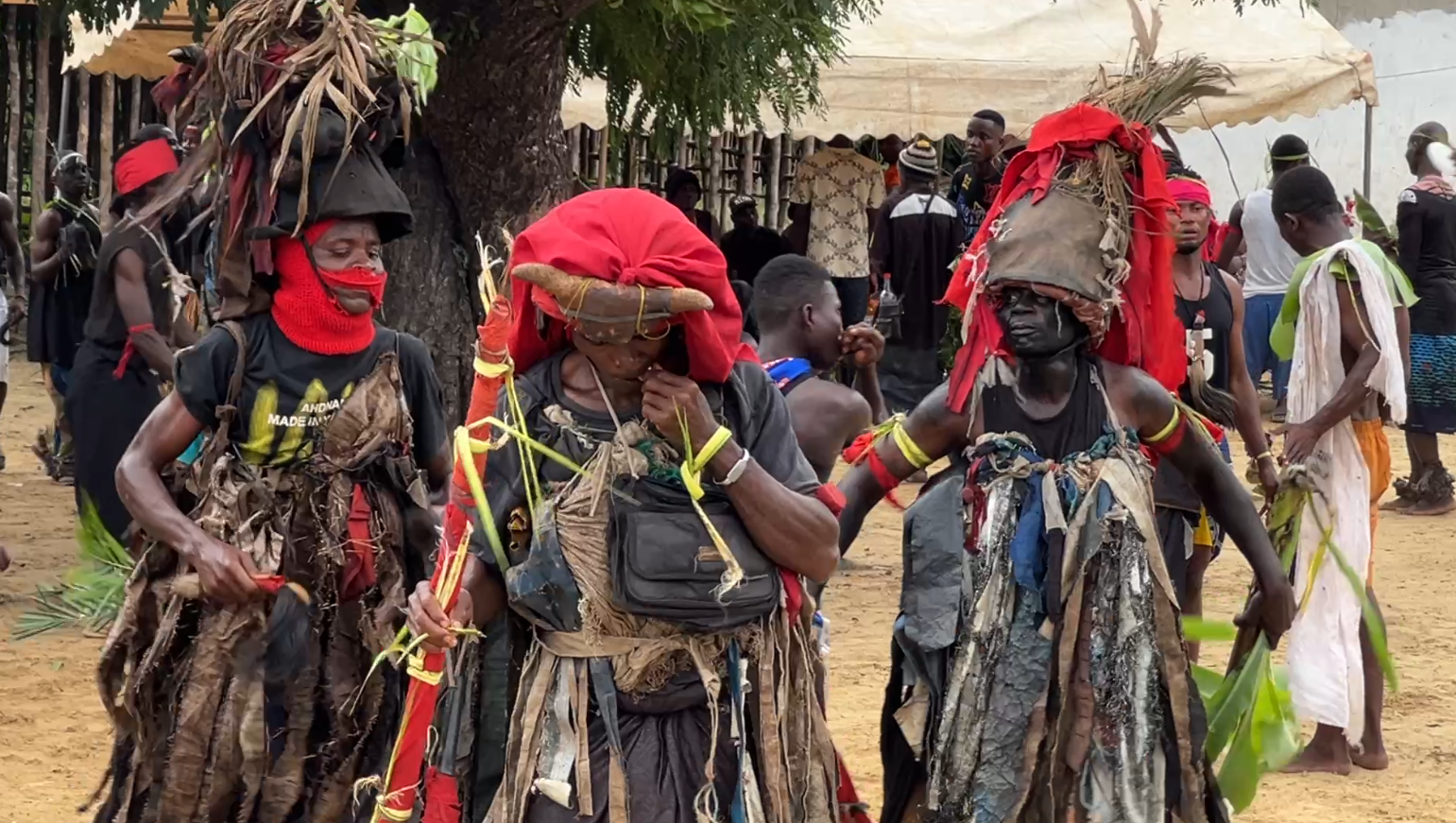

Rocheford T. Gardiner, Harper, Liberia – The Grebo “War Dance” is a unique ceremony primarily used to honor the adult deceased, key community figures, and sometimes, national personalities.
During the dance, participants showcase their war and fitness skills, displaying traditional weapons such as cutlasses, machetes, spears, and bows and arrows. As times modernized, firearms (riffles) were also incorporated into the dance.

01
Customize
Unforgettable Experiences
We collaborate with your preferences and our knowledge to create experiences that will be remembered for years.
02
Review
Preserve Memories
We partner with renowned photographers and videographers to preserve those invaluable moments.
03
Organize
Relax and Unwind
No need to worry about anything – we expertly arrange every detail ensuring a stress-free schedule, with contingency plans for any unexpected circumstances, allowing you to fully enjoy your time
04
Personalize
Create Memorable Experiences
Discover a multitude of unique attractions and experiences with our extensive network of vendors, offering innovative ideas that will impress your guests and make your event truly extraordinary


While the dance is fundamentally a tribute of honor, the Grebos historically leveraged it to demonstrate their readiness to defend the community. In the early days, with relentless wars between tribal groups and colonizers vying and frantically jostling for land, this celebration was far from ceremonial. It served as a powerful deterrent, allowing potential enemies to gauge the strength, fierceness, and determination of the Grebo people. It was common to see Grebo warriors, often described as having well-developed physiques, being as tall as eight feet (8′), and having hairy bodies.
For those with a belief in spirituality, it is widely held that mystical powers were also displayed during these events. For this reason, “ordinary people” were often discouraged from attending certain segments of the dance.
Today, however, the “War Dance” has shed much of its ferocity and vigor, though the tradition continues to be observed. Now, young children are allowed to participate as a form of hands-on training. More importantly, it remains a beautiful cultural spectacle and a powerful unifying event, drawing people from other clans to participate or simply socialize with friends and relatives and especially members of the bereaved family.

Unfortunately, this significant tradition is rarely discussed in Liberian history, meaning many other Liberians remain unaware of its cultural importance.