
“A Revolutionary Pan-African Masterpiece Dedicated to National Consciousness, Accountability, and Economic Liberation”
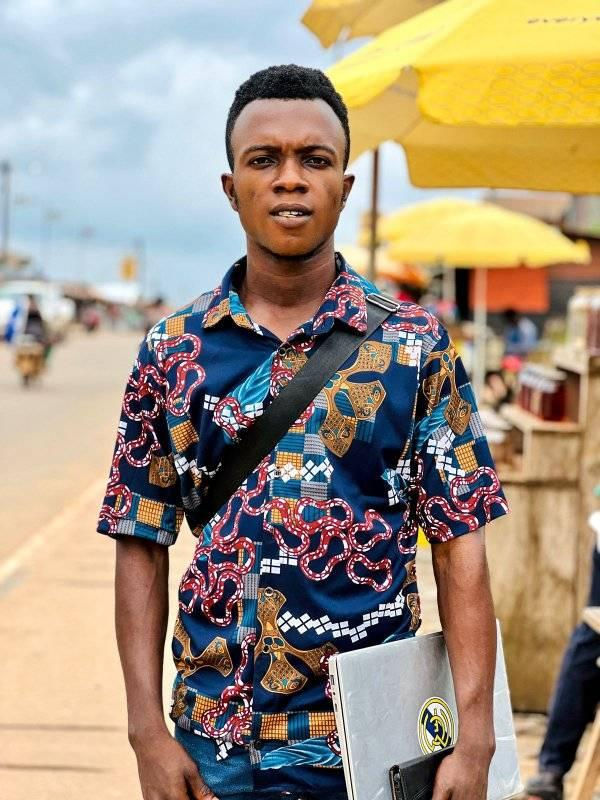
Author: Activist Edwin G. Genoway

INTRODUCTION
Liberia, Africa’s oldest republic—the land of promise and possibility—stands today as one of the world’s richest countries in natural resources yet simultaneously sits on one of the world’s poorest populations. For more than a century, Liberia’s national destiny has been shaped not by the collective aspirations of its people, but by entrenched political elites, foreign multinational corporations, concession regimes, and governance structures that prioritize personal wealth over public welfare.
The result is a staggering contradiction: a nation endowed with iron ore, diamonds, gold, fertile land, vast forests, rich marine life, and an enviable geographic position but unable to provide quality education, stable electricity, safe drinking water, or functioning health systems to its citizens.
This masterpiece seeks to uncover, interpret, and expose the mechanisms through which Liberia’s wealth has been siphoned, mismanaged, and converted into private fortunes while the masses remain trapped in poverty. It challenges the traditional political narrative and places national healing and transformation within the framework of Pan-African consciousness, economic justice, and democratic accountability. This is not merely an academic review—it is a call for generational introspection, a wake-up alarm to our conscience, and a revolutionary demand for economic reorientation.
To understand Liberia’s present, we must boldly revisit the past. To shape its future, we must confront the actors, systems, and ideologies that have stolen its progress. And to safeguard its destiny, we must empower Liberians to reclaim the wealth that rightfully belongs to them and their future generations.
SECTION 1: A HISTORICAL OVERVIEW OF LIBERIA’S LOST POSSIBILITIES
1.1. The Foundational Contradictions of Liberia’s Nationhood
Liberia’s national struggle did not begin today. Its roots can be traced to a century-long contradiction: a republic founded on the ideals of freedom yet marred by a governance tradition that excluded the indigenous majority. This contradiction created political hierarchies, economic inequalities, and power concentrations that still exist today. Historically, Liberia’s central problem was never the absence of resources—it was the distribution and control of those resources.
The founding political class created an economic system that revolved around a privileged minority. Concessions were granted without regard for the national interest, and the wealth of the land became the wealth of political custodians rather than the nation. While the rhetoric of freedom shaped the national anthem, the reality of economic exclusion shaped daily life.
1.2. Foreign Concessions: The Beginning of Liberia’s Wealth Extraction
The Firestone concession of 1926 stands as one of the most emblematic examples of Liberia’s long history of resource mismanagement. A 99-year agreement allowed Firestone to acquire one million acres of land for rubber cultivation—almost the size of a small nation—at a price that today would be considered ridiculous, unjust, and exploitative. This was not merely a business arrangement; it was the blueprint for modern economic extraction in Liberia.
Iron ore concessions, timber agreements, and gold exploration rights followed the same pattern: Liberia received crumbs while foreign corporations acquired colossal profits. Monopolized wealth created political godfathers, and political godfathers reinforced concession systems. This is the vicious cycle that continues to define Liberia’s economy.
1.3. The Civil Conflict: A Result and a Consequence of Economic Inequality
The Liberian civil conflict was not simply a war of guns; it was a war born from decades of inequality, corruption, exclusion, and suffocating poverty. Political leaders who failed to distribute national wealth equitably sowed the seeds of rebellion. Armed factions emerged not only from political grievances but from structural economic deprivation.
Even after the war ended, the patterns continued. The same concession systems were reinstated. The same political actors rebranded themselves. Poverty deepened. The youth became victims of cyclical underdevelopment. Liberia’s vast resources continued to serve foreign interests and local elites while the ordinary woman in Foya, the fisherman in Buchanan, the farmer in Bong, and the petty trader in Duala remained constrained by hardship.
Liberia’s tragedy is not lack of wealth—it is lack of responsible stewardship.
SECTION 2: THE POLITICS OF POVERTY AND THE ECONOMICS OF EXTRACTION
2.1. Governance Built on Patronage Rather Than Policy
Liberian politics has, for generations, been driven by personality worship rather than institutional development. Political parties function as patronage networks rather than ideological platforms. Elections become transactional battles where loyalty is bought, not earned. The legislature, rather than serving as a watchdog of public resources, often becomes a marketplace of influence where national decisions are traded for personal gain.
This political culture does not create policies; it creates dependency. It does not empower citizens; it manipulates them. It does not elevate governance; it reduces the nation to a plantation of the privileged.
2.2. Public Budgeting as an Instrument of Elite Accumulation
A glaring example of Liberia’s mismanagement is reflected annually in the national budget. Instead of being a tool for economic redistribution, the budget becomes a reflection of elite appetite. Salaries of lawmakers balloon. Benefits and allowances multiply. Procurement fraud becomes normalized. Meanwhile, schools lack textbooks, hospitals lack drugs, and communities lack basic infrastructure.
- How can a nation with a budget surpassing a billion dollars still have citizens drinking untreated creek water in 2025?
- How can lawmakers earn astronomical allowances while teachers strike for months without pay?
- Why do communities remain inaccessible during rainy seasons despite decades of road financing?
The answer is simple: public office in Liberia often serves private interests.
⛏ SECTION 3: SECTORS WHERE LIBERIA LOST ITS WEALTH
3.1. The Mining Sector: From Iron Mountains to Empty Pockets
Liberia’s iron ore once accounted for more than half of the nation’s export revenue. Companies such as LAMCO, Bong Mining Company, China Union, ArcelorMittal, and Putu extracted billions of dollars’ worth of minerals. Yet mining communities remain among the poorest.
Promises of roads, clinics, housing, and development funds often disappeared into political pockets or poorly managed county social development accounts (CSDAs). The mines were emptied, the wealth exported, and the people abandoned. Liberia became a textbook example of the “resource curse.”
3.2. The Forestry Sector: A Forest of Gold and a Desert of Poverty
Liberia’s tropical rainforest is one of the largest in West Africa. But illegal logging, fraudulent permits, unregulated timber exports, and concession politics turned a blessing into a national embarrassment. Communities whose land hosts these forests do not receive tangible benefits. Roads promised by timber companies are rarely built. Clinics never materialize. Schools remain in deplorable states.
Liberia’s forest wealth has enriched foreign corporations more than Liberian children.
3.3. Agriculture: The Forgotten Backbone of Development
Liberia imports over 200 million dollars’ worth of food annually—even though it possesses some of the most fertile soil in the region. Agricultural neglect is one of Liberia’s greatest betrayals. From rice production to cassava, cocoa, palm oil, and fisheries, Liberia has the potential to feed not only its population but its neighbors. Yet decades of policy neglect left the nation dependent on foreign importers.
A nation that cannot feed itself cannot call itself independent.
3.4. The Maritime Sector: A Giant Sleeping in Broad Daylight
Liberia hosts the world’s second-largest ship registry. Yet its revenues consistently fall short of expectations due to policy loopholes, weak accountability, and lack of investment in maritime education. Instead of turning the registry into a national economic powerhouse, it has become a lightly monitored revenue stream delivering far less than its potential.
SECTION 4: THE HUMAN COST OF LIBERIA’S MISMANAGEMENT
4.1. Youth Unemployment and the Burden of Hopelessness
More than 70% of Liberia’s population is under age 35. Yet this demographic is trapped in a cycle of unemployment, limited opportunities, and unfulfilled potential. When a nation’s most productive population segment becomes idle, the economy stops breathing.
Youth unemployment is not merely a statistic—it is a national emergency. It breeds crime, drug abuse, migration, transactional survival, and political manipulation.
4.2. Education: A Struggling System That Produces Struggling Citizens
Liberia’s education system remains fragile. The lack of qualified teachers, absence of modern learning tools, poor infrastructure, and inconsistent curriculum has created a generation underprepared for global competition. How can a nation with broken schools expect its children to fix its future?
4.3. Healthcare: The Silent Cost of Neglect
From the Liberian woman giving birth on a motorbike to children dying from preventable diseases, the health sector reflects the depth of mismanagement. Hospitals lack equipment. Healthcare workers lack training and incentives. Villages lack clinics. Disease outbreaks expose systemic weakness.
Healthcare is a human right, not a luxury.
4.4. Infrastructure: A Country Still Waiting for the Basics
Roads, electricity, water, and communication systems remain inadequate. The impact is enormous—farmers cannot transport crops, businesses cannot expand, children cannot learn, and hospitals cannot function. Liberia loses millions of dollars annually due to poor infrastructure.
In Part II, our advocacies will focus on “THE POLITICAL PSYCHOLOGY THAT SUSTAINS CORRUPTION”.
Author: Activist Edwin G. Genoway is a Liberian activist, historian, instructor, humanitarian, and Pan-Africanist dedicated to social justice, legacy preservation, and African unity.