
by Rocheford T. Gardiner
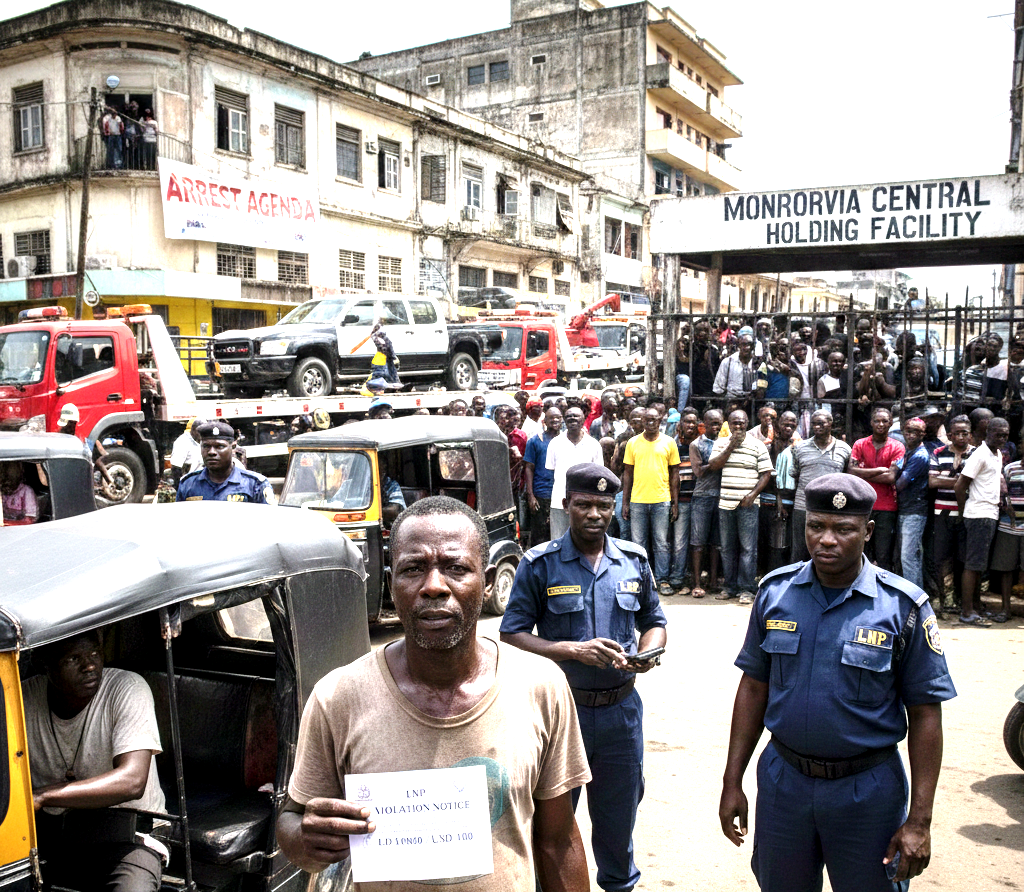
MONROVIA – A deepening standoff between the Liberia National Police (LNP) and the public has reached a breaking point this week, as the government’s aggressive new traffic enforcement regime collides with a staggering cost-of-living crisis. While authorities defend the high fines as a necessary pillar of the ARREST Agenda to restore order, critics warn the policy is criminalizing poverty and pushing an already fragile prison system toward total collapse.
A Price Tag Few Can Pay
Under the new enforcement drive, relatively minor infractions—such as a non-functioning taillight or expired registration—now carry penalties that exceed the monthly earnings of the average Liberian (up to $500.00 USD).
In a nation where nearly 45% of the population lives in multidimensional poverty and many survive on less than $2 a day, the financial barrier to justice is insurmountable.
“They are asking for money we don’t have to fix a system that isn’t working for us,” said one keh-keh (tricycle) driver in Central Monrovia. “If I pay a US$100 fine, my children will not eat for a month. It is not a fine; it is an eviction from my livelihood.”
Civil society groups estimate that 95% of Liberians cannot afford these sudden, “unreasonable” financial hits. With the Liberia Revenue Authority (LRA) reporting record collections—exceeding US$818 million in 2025—the perception that the police have been converted into a revenue-generating machine at the expense of the poor has sparked widespread resentment.
The Looming Prison Crisis

The most alarming fallout of the “fine or jail” policy is the catastrophic pressure on the nation’s correctional facilities. Liberia’s prisons are already notorious for “obnoxious” conditions and extreme overcrowding:
- Monrovia Central Prison: Built for 374 inmates, it currently holds over 1,300, with detainees reportedly forced to sleep in shifts or in hallways.
- The Pipeline to Prison: Because the vast majority of offenders cannot pay the fines “forthwith,” the law dictates they be committed to prison to liquidate the debt through labor.
- A System at Capacity: Human rights advocates warn that “petty” traffic violators are now being funneled into a system that cannot even provide one meal a day to its current population.
“We are essentially creating a debtor’s prison,” says a legal analyst. “By locking up breadwinners for minor traffic offenses, we aren’t making the roads safer—we are making the prisons more dangerous and the streets more desperate.”
The Government’s Defense
Inspector General Gregory Coleman and the Ministry of Justice maintain that the strict measures are the only way to “restore sanity” to Liberia’s chaotic transit corridors. They argue that the digitalization of fines will eventually eliminate roadside bribery and ensure funds go toward the national budget, which includes a proposed US$25.7 million for police welfare and salary increases.
However, as the 2026 fiscal year begins, the gap between the government’s “Rule of Law” ambitions and the lived reality of its citizens has never been wider. Without a recalibration of fine amounts or the introduction of community service alternatives, Monrovia’s streets may remain a battleground between a cash-strapped public and a police force under pressure to perform.
A pretty good piece