
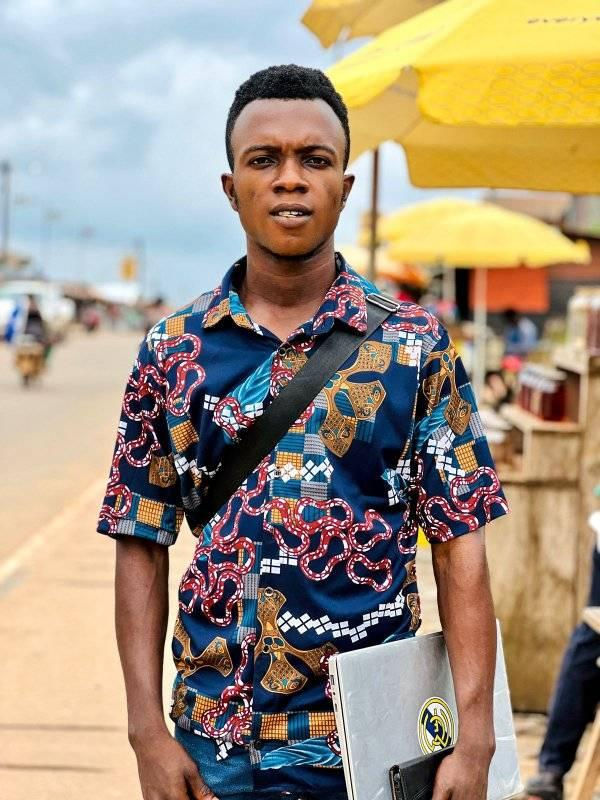

Author: Activist Edwin G. Genoway, August 24, 2025
Prologue: This article explores the history of Maryland Colony, Maryland State in Africa, and how Maryland eventually joined Liberia. It also highlights how freed slaves emerged to establish the Republic of Maryland in Africa.(Take your time reading through)
After the abolition of the Atlantic Slave Trade in the early 19th century, freed Blacks and abolitionist groups began forming colonies and commonwealths in Africa. Ironically, many of these freed slaves were originally captured Africans who had suffered under slavery. Once freed, they sought to reclaim their dignity and build new lives in Africa.
During this period, several major slave revolts shook America: such as those led by Cato (1739), Denmark Vesey (1822), and Nat Turner (1831)—all of which intensified the push for emancipation. At the same time, organizations like the American Colonization Society (ACS, founded 1816) and the Maryland State Colonization Society (MSCS, founded 1831) were created to resettle freedmen in Africa.
The MSCS claimed to have about 54,000 freed slaves under its consideration and allocated 10,000usd for resettlement in Africa. However, mismanagement and corruption prevented the full plan from being realized.
1. Maryland Colony
In 1834, the MSCS appointed Dr. James Hall and John Brown Russwurm to lead emigrants from Maryland, USA, to Africa. Their destination was Cape Palmas. Despite plans to transport thousands, the first voyage—on the ship (Ark) carried only about 150 settlers.
In 1836, John Brown Russwurm, editor of the Liberia Herald and one of the first African American newspaper editors in the United States, became the colony’s first full governor. Under his leadership, the population grew from 150 to nearly 1,000 settlers, and diplomatic ties were formed with other settlements along the coast.
2. Maryland in Africa
On February 2, 1841, Maryland Colony was recognized as Maryland in Africa. By 1847, it had adopted its own constitution. Following Russwurm’s death in 1851, Dr. Samuel Ford McGill, a prominent Liberian physician and statesman, pushed for independence.
Despite opposition from colonization leaders in the U.S., McGill spearheaded Maryland’s Declaration of Independence, and on May 29, 1854, Maryland in Africa became an independent republic.
However, independence came with challenges. Relations with the Grebo and Kru soured, leading to wars that threatened the new republic. Cape Palmas was renamed Harper in honor of Robert Goodloe Harper, a U.S. senator and colonization advocate.
3. Maryland Joining Liberia
After independence, leadership shifted to Governor William A. Prout (1854) and later Governor Boston Jenkins Drayton (1856–1857). Under both men, Maryland faced ongoing warfare with the Grebo and Kru.
Though the MSCS sent weapons, the settlers could not suppress local resistance. In desperation, Drayton appealed to Liberia for assistance. At that time, Liberia was already a sovereign nation with four counties and a stronger military presence.
On March 18, 1857, Maryland in Africa officially united with Liberia, becoming its fifth county. This was not because Maryland was founded in 1857, but because it was annexed after military pressure and internal struggles.
Maryland Colony, Maryland in Africa, and Maryland in Liberia all represent the same historical entity—what we know today as Maryland County. Its true founding was in 1834, not 1857 as some modern signboards suggest.
We must not misinterpret or dilute this history. The story of Maryland is rich; shaped by, freed slaves, indigenous peoples, and the struggle for independence. As Liberians, we must reclaim this history, preserve oral traditions, and write with clarity rather than relying solely on colonial-era narratives.
Much of what we know was written by freedmen and early settlers, often leaving out indigenous perspectives (historics). It is our responsibility to rebuild this historical record for future generations.
Footnote: Activist Edwin G. Genoway is a Liberian activist, historian, instructor, humanitarian, and Pan-Africanist committed to social justice, legacy preservation, and African unity.
Contact: +231555226526 or +231770525519


Great platform for historical and journalistic information dissimilation. I’m consciously following.