
by Rocheford T. Gardiner
GENEVA – The United Nations’ migration agency, the International Organization for Migration (IOM), has reported a devastating start to 2026, with over 600 migrants confirmed dead or missing in the Mediterranean Sea since the beginning of 2026. The grim statistics highlight the escalating humanitarian crisis in the region and underscore the perilous journeys undertaken by those seeking safety and a better life in Europe.
The majority of these tragic incidents have occurred along the Central Mediterranean route, a notoriously dangerous passage from North Africa to Italy and Malta. This route has consistently been identified as the deadliest in the world for migrants and refugees. Factors contributing to the high casualty rate include overcrowded and unseaworthy vessels, harsh weather conditions, and a lack of adequate search and rescue operations.
“These are not just numbers; these are lives lost, families shattered, and dreams extinguished,” stated an IOM spokesperson during a press briefing in Geneva. “The international community must redouble its efforts to address the root causes of irregular migration, enhance safe and legal pathways, and ensure robust and well-resourced search and rescue mechanisms are in place across the Mediterranean.”
The IOM’s data indicates a significant increase in fatalities compared to the same period in previous years, signaling a worsening situation. The agency has repeatedly called for greater international cooperation to manage migration flows humanely and to combat the criminal networks of human traffickers who exploit vulnerable individuals.
Aid organizations operating in the Mediterranean have also voiced their alarm, reporting an uptick in distress calls and rescue operations, often overwhelmed by the sheer number of people in need of assistance. Many emphasize that the true death toll is likely higher, as many shipwrecks go unrecorded and bodies are never recovered.
The ongoing conflict and instability in several North African and Middle Eastern countries continue to be primary drivers of migration across the Mediterranean. People flee war, persecution, poverty, and climate change impacts, often seeing no other option but to embark on these treacherous journeys.
As the weather improves in the spring and summer months, there are fears that the number of attempted crossings, and consequently the death toll, could rise even further. The IOM and its partners are appealing to European nations to prioritize saving lives, uphold international law, and implement comprehensive and compassionate migration policies.
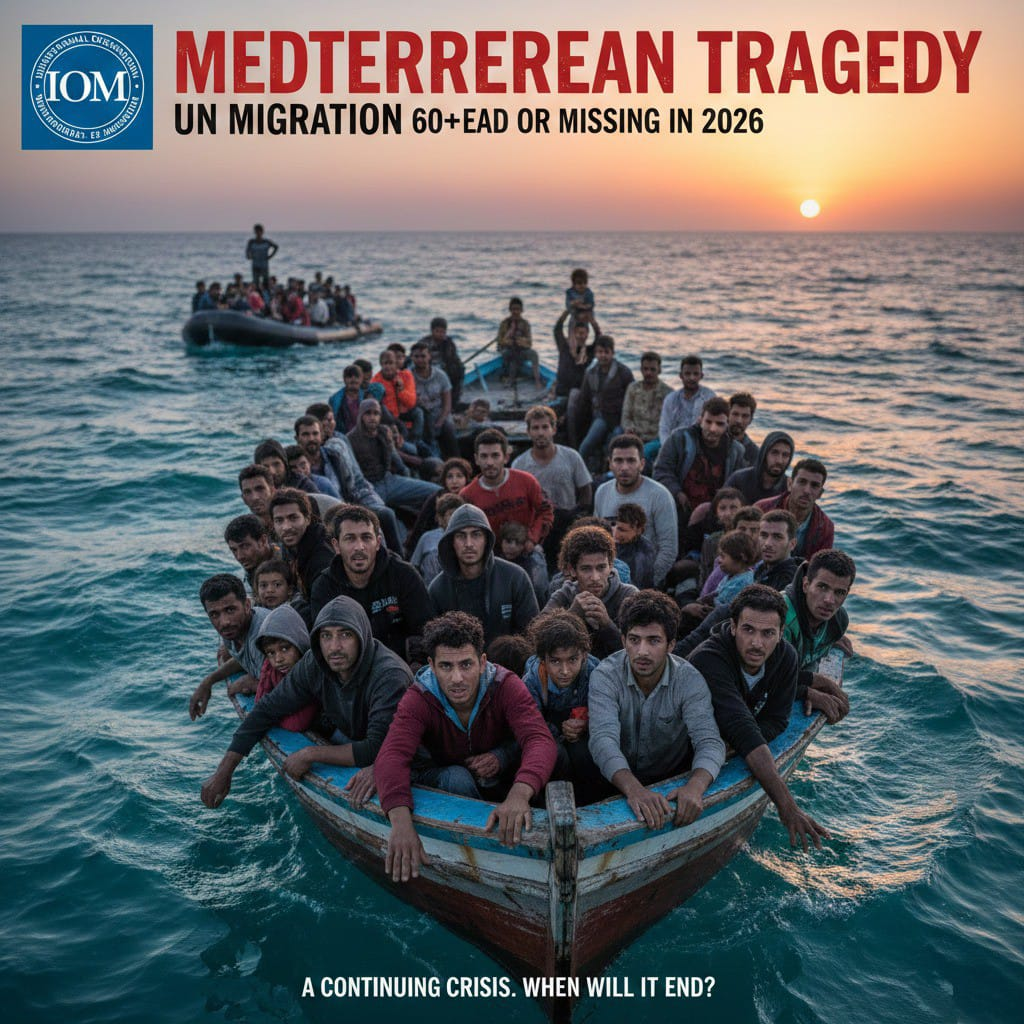
Here is a cover picture with the UN’s migration organization logo and migrants crossing the Mediterranean Sea in boats: