
by Rocheford T. Gardiner
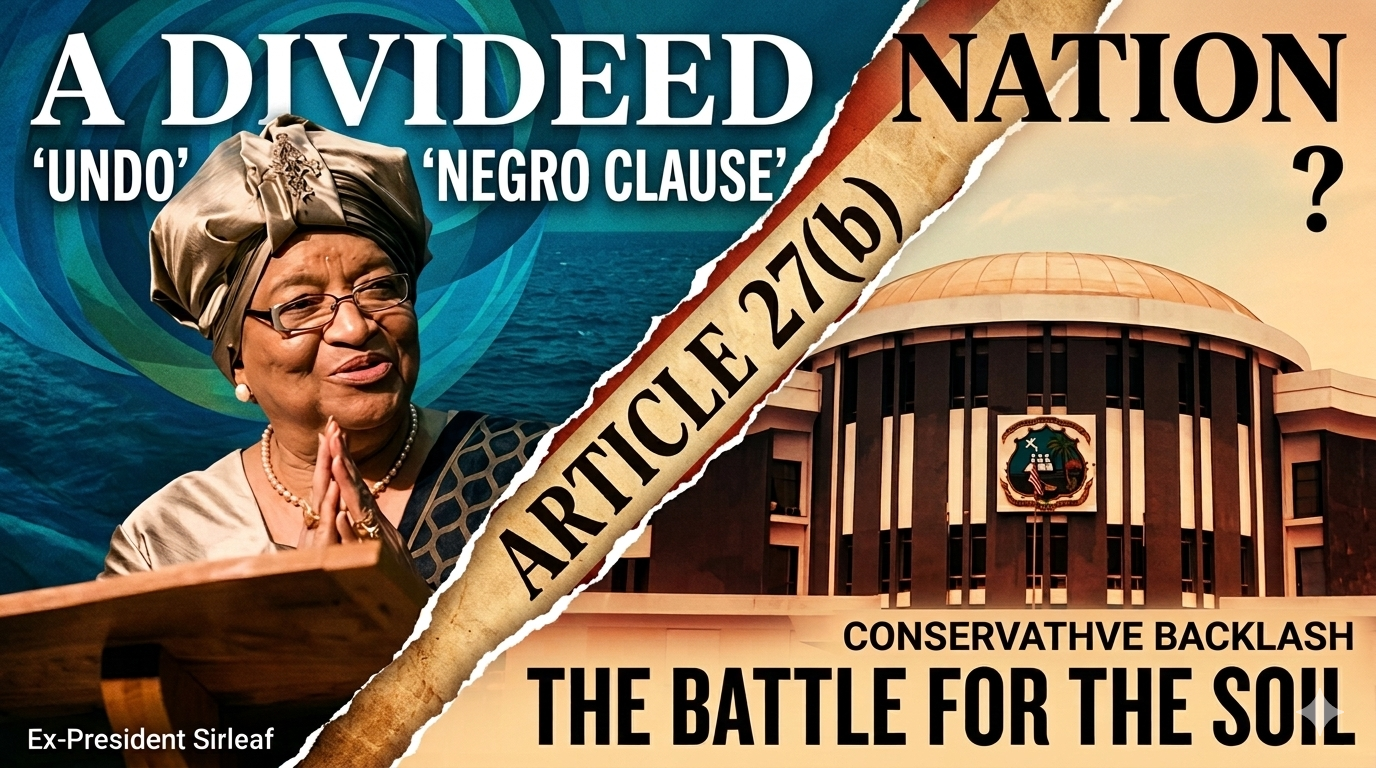
MONROVIA, March 6, 2026 — an historic address by former President Ellen Johnson Sirleaf to the House of Representatives has ignited a fierce national debate, pitting modern reformists against conservative traditionalists over the very definition of what it means to be “Liberian.”
Speaking at a rare plenary session on Thursday, Africa’s first female head of state delivered a pointed critique of the 1986 Constitution, specifically targeting Article 27(b)—the controversial “Negro Clause.”
The “Racist” Provision
Sirleaf did not mince words, labeling the provision a “racist” relic that no longer serves the interests of a modern Liberia. Article 27(b) states:
“In order to preserve, foster and maintain the positive Liberian culture, values and character, only persons who are Negroes or of Negro descent shall qualify by birth or by naturalization to be citizens of Liberia.”
Sirleaf argued that this racial restriction on citizenship hinders economic development and isolates Liberia from the global community. “My plea now is that you consider the necessary amendment,” she told the 55th Legislature, urging them to lead a new wave of constitutional reform to “undo” the provision.

The Conservative Backlash
The former president’s remarks have met immediate and vocal resistance from conservative factions within the country and the legislature. For many traditionalists, the Negro Clause is not an act of racism, but a vital protectionist measure established by the nation’s founders to safeguard land and sovereignty from foreign exploitation.
Key arguments from the conservative front include:
- Land Ownership: Under current law, only citizens can own land. Conservatives fear that opening citizenship to non-Negroes (particularly Lebanese, Indian, and Western investors) would lead to a “land grab” that displaces indigenous Liberians.
- Cultural Identity: Many argue that the provision is essential to maintaining the unique cultural heritage of a nation founded by formerly enslaved people.
- Historical Context: Defenders of the clause point out it was a response to the era of “white imperialism,” designed to ensure that the only African republic at the time remained in the hands of black Africans.
A Divided Capitol Hill
While Speaker Richard Nagbe Koon praised Sirleaf’s “wisdom and experience,” the halls of the Capitol Building are already buzzing with dissent. Previous attempts to repeal the clause—most notably during the 2020 referendum—failed to gain traction due to deep-seated public apprehension.
Critics of the former president were quick to point out that the “Liberianization Policy,” which reserves certain business sectors for citizens, is already struggling. They argue that removing the racial barrier to citizenship would be the final blow to local entrepreneurs.
The Road Ahead
The address has effectively reopened a “Pandora’s box” of identity politics. With President Joseph Boakai currently focusing on “Rescue” missions for the economy and infrastructure, Sirleaf’s call for a constitutional overhaul adds a layer of social volatility to the political landscape.
As Liberia processes the speech, one thing is clear: the debate over Article 27 is no longer just a legal academic exercise—it is a battle for the soul and the soil of the Republic.