
By Rocheford T. Gardiner
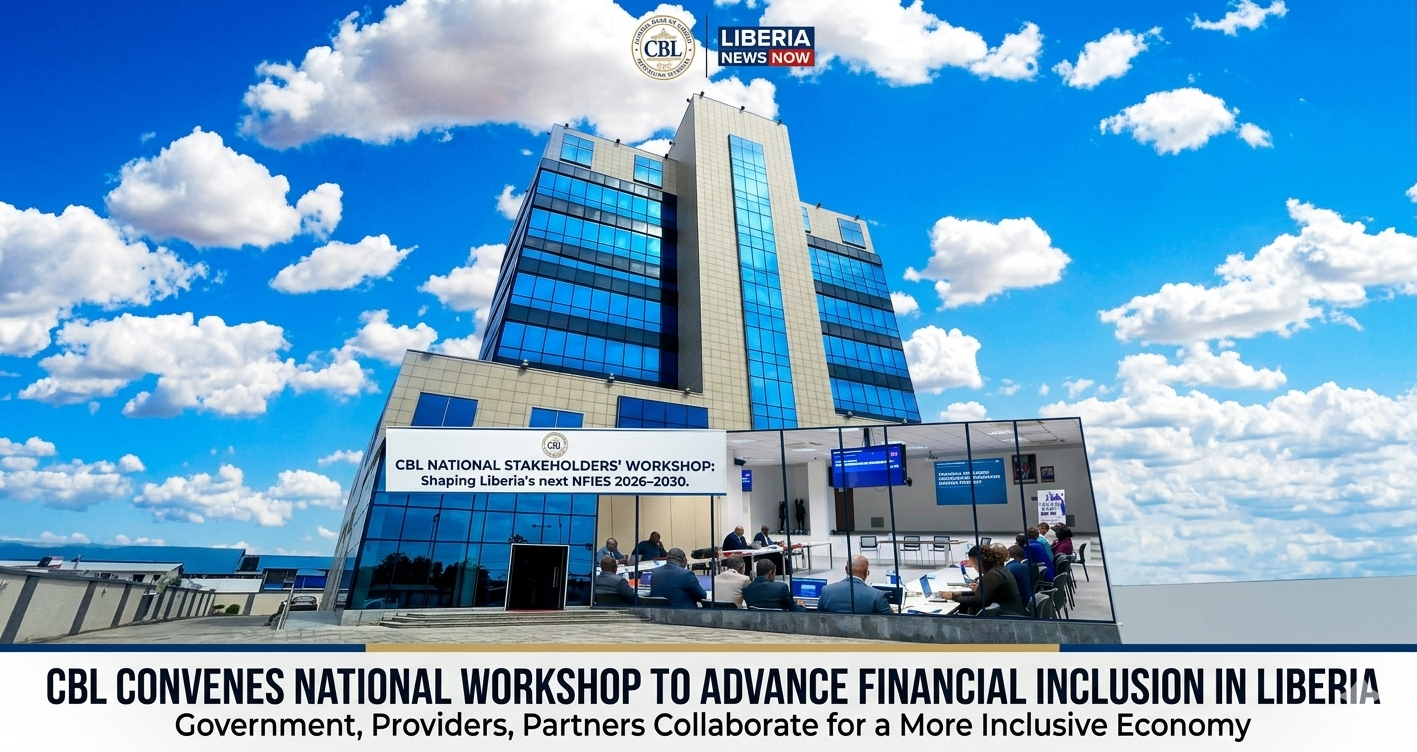
MONROVIA – In a decisive move to modernize the nation’s economy, the Central Bank of Liberia (CBL) has officially convened a high-level national stakeholders’ workshop. The primary goal is to architect the National Financial Inclusion and Education Strategy (NFIES) 2026–2030, a five-year roadmap designed to ensure no Liberian is left behind by the formal financial system.
The workshop serves as a collaborative war room, bringing together an influential mix of government agencies, commercial banks, mobile money operators, civil society organizations, and international development partners.
The Goal: Banking the Unbanked
At its core, the NFIES initiative seeks to dismantle the barriers that prevent everyday Liberians—particularly those in remote, rural regions—from accessing the tools they need to build wealth.
“Financial inclusion is not just a policy goal; it’s a pathway to dignity and economic resilience,” the CBL noted during the opening session. The strategy aims to streamline access to four critical pillars of financial health:
- Secure Savings: Transitioning from informal “under-the-mattress” saving to regulated accounts.
- Mobile Money: Leveraging Liberia’s growing digital footprint to facilitate instant payments.
- Credit & Loans: Providing small business owners and farmers with the capital needed to expand.
- Insurance: Protecting vulnerable populations against unforeseen economic shocks.
Breaking Down the Barriers
The workshop isn’t just about high-level theory; it is focused on solving the “on-the-ground” bottlenecks that have historically hampered progress. Delegates are currently tackling three primary challenges:
- Regulatory & Policy Gaps: Modernizing laws to keep pace with rapid fintech innovation.
- Infrastructure Limitations: Addressing the “digital divide” by improving internet connectivity and the rollout of a robust National Digital ID system.
- Institutional Coordination: Ensuring that various government and private entities aren’t working in silos, but rather toward a unified national vision.
A Strategy Built on Collaboration
Unlike previous top-down mandates, the CBL has emphasized that the 2026–2030 strategy will be a “living document” built on collective input. The bank highlighted that the current phase is focused on “listening, learning, and agreeing on the steps we need to take together.”
The outcomes of these sessions will directly shape the final policy, with a heavy emphasis on consumer protection and financial literacy. By educating the public on how to use these new digital tools safely, the CBL hopes to build long-term trust in the banking sector.
As the workshop continues, the eyes of the nation are on the CBL. The transition to a more inclusive financial system represents a significant milestone in Liberia’s journey toward sustainable economic development and poverty reduction.
