
By Rocheford T. Gardiner
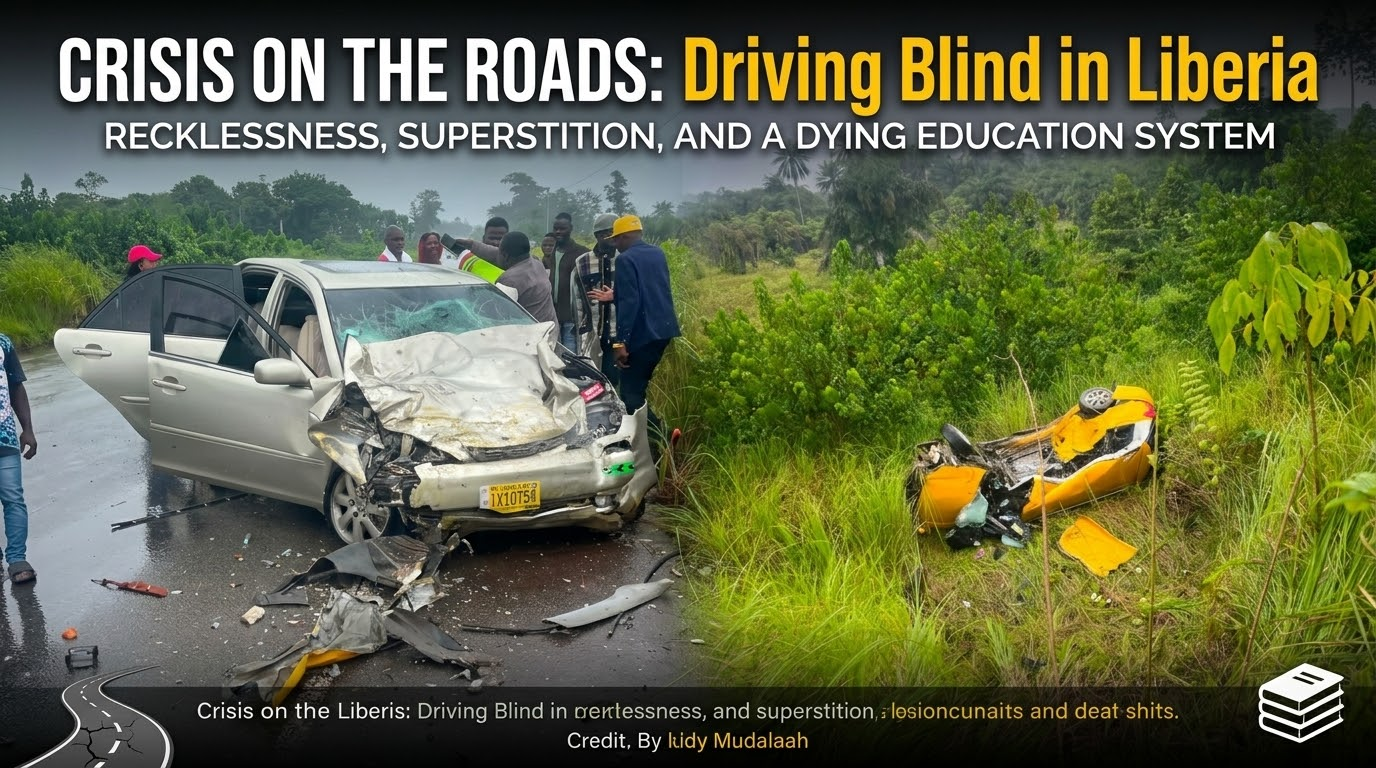
Harper, Liberia — Every single day on Liberia’s highways and city streets, a quiet, preventable catastrophe unfolds. Taxis and pehn-pehns (motorbikes) dart through traffic with a reckless disregard for human life, treating public roads like raceways. Most of these drivers are young men—inexperienced, impulsive risk-takers driven by a dangerous desire to break speed records on infrastructure never built to handle them.
The consequences are devastating. The World Health Organization estimates Liberia’s road traffic mortality at roughly 35 to 38 deaths per 100,000 people—more than doubles the global average. The World Bank reports that these preventable crashes cost Liberia up to 7% of its annual GDP in lost productivity, medical bills, and property damage.

Yet, the tragedy does not end at the steering wheel. The passengers packed into these vehicles share an equal burden in this lethal culture. Driven by immaturity and deep-seated ignorance, passengers routinely walk willingly into danger. Worse still, when a rare voice of reason speaks up—when a concerned rider begs a driver to slow down—it is often the other passengers who lash out. They silence the sensible voice under the absurd, superstitious pretense that warning a reckless driver brings “bad luck.” On Liberian roads, civic courage is actively mocked, while dangerous incompetence is shielded.
Where is the state in all of this? The Liberian National Police (LNP), charged with safeguarding public life, appears functionally absent from safety enforcement. Instead, police presence manifests primarily through the aggressive collection of high tariffs on vehicle registration. Safety regulations are ignored while revenue extraction takes center stage. It is a deeply disheartening state of affairs—a sick dynamic where human life is traded for official indifference and cheap thrills.

What makes this daily spectacle truly alarming, however, is not just the immediate body count on our highways. It is what these roads reveal about the nation’s future.
These reckless young drivers and passively obedient passengers are the very people set to inherit Liberia. They are the future lawmakers, cabinet ministers, civil servants, and community leaders of this country. Yet, they are growing up in an environment that systematically deprives them of discipline, critical thinking, and respect for the rule of law.
This road crisis is a direct, visible symptom of Liberia’s dismal education system. UNICEF reports that approximately 50% of school-aged children in Liberia are currently out of school, while barely half of those who enroll ever manage to complete primary education. Decades of chronic underfunding, dilapidated schools, and untrained teachers have left an entire generation functionally uneducated. When a school system fails to teach basic logic, civic duty, and scientific reasoning, superstition fills the void. When youth are given neither vocational skills nor academic rigor, impulse replaces judgment.

A nation cannot starve its youth of quality education today and expect visionary, disciplined governance tomorrow. The lawlessness on our roads is a preview of the lawlessness we will face in our public institutions if nothing changes.
If Liberia does not immediately overhaul its failing education sector and enforce genuine law enforcement accountability, the casualty list will extend far beyond motor accidents. We will be driving an entire country headfirst into a national failure.
