
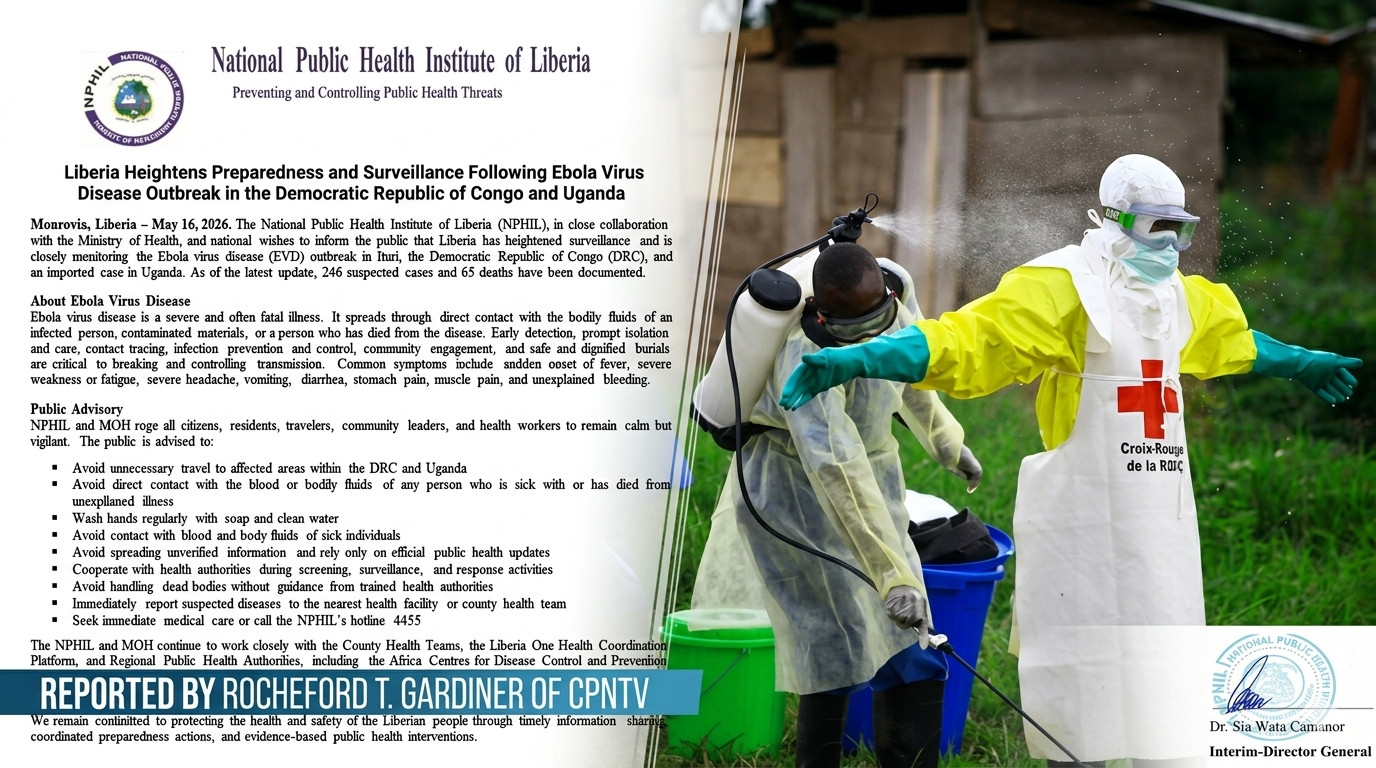
Liberia Heightens Border Surveillance and Ebola Preparedness Amid Outbreak in DRC and Uganda
by Rocheford T. Gardiner
MONROVIA, LIBERIA — In response to a surging outbreak of Ebola Virus Disease (EVD) in Central and East Africa, the National Public Health Institute of Liberia (NPHIL), in coordination with the Ministry of Health, has officially heightened its national surveillance and preparedness protocols.
The emergency measures come immediately following reports of a rapidly evolving EVD situation in the Ituri province of the Democratic Republic of Congo (DRC), alongside a newly confirmed imported case across the border in Uganda. According to the latest epidemiological data released by health authorities, the outbreak has already accumulated 246 suspected cases and claimed at least 65 lives.
While no cases of Ebola have been detected within Liberia’s borders, health officials are taking no chances, given the region’s historic vulnerability to the virus.
Understanding the Threat: What is Ebola?
Ebola virus disease is a severe, often fatal illness in humans. The virus introduces a severe hemorrhagic fever and is transmitted to humans through close, direct contact with the blood, secretions, organs, or other bodily fluids of infected individuals, or through surfaces and materials (e.g., bedding, clothing) contaminated with these fluids.
Public health experts emphasize that breaking the chain of transmission relies heavily on a multi-faceted approach, including:
- Early detection and rapid isolation of cases
- Thorough contact tracing
- Strict infection prevention and control (IPC) measures in healthcare settings
- Direct community engagement
- Safe and dignified burials to prevent post-mortem transmission
Key Symptoms to Watch For
The onset of Ebola symptoms can be sudden and severe. NPHIL has advised the public to monitor for:
- Sudden onset of fever and severe weakness or fatigue
- Severe headache and muscle pain
- Vomiting and diarrhea
- Stomach pain
- Unexplained bleeding or bruising
Government Issues Public Advisory
In an official statement signed by Dr. Sia Wata Camanor, Interim-Director General of NPHIL, the government urged citizens, residents, and travelers alike to remain calm but highly vigilant.
“We remain committed to protecting the health and safety of the Liberian people through timely information sharing, coordinated preparedness actions, and evidence-based public health interventions,” Dr. Camanor stated.
To safeguard communities, NPHIL and the Ministry of Health have issued the following strict public health directives:
- Travel Restrictions: Avoid unnecessary travel to affected areas within the DRC and Uganda.
- Hygiene Practices: Wash hands regularly with soap and clean water.
- Direct Contact Prevention: Avoid direct contact with the blood or bodily fluids of anyone who is sick, or anyone who has died from an unexplained illness. Do not handle dead bodies without direct guidance from trained health authorities.
- Infoline Cooperation: Avoid spreading unverified information and rely exclusively on official public health updates. Cooperate fully with health authorities during screening, surveillance, and response activities.
- Rapid Reporting: Immediately report any suspected illnesses to the nearest health facility or county health team, or call the NPHIL official hotline at 4455.
A Coordinated Regional Response
Liberia’s proactive stance is part of a broader, synchronized regional effort. NPHIL and the Ministry of Health are actively collaborating with localized County Health Teams, the Liberia One Health Coordination Platform, and regional public health giants.
International stakeholders—including the Africa Centres for Disease Control and Prevention (Africa CDC), the West African Health Organization (WAHO), and the World Health Organization (WHO)—are actively monitoring the evolving situation to reinforce national borders and ensure resources are strategically deployed to prevent a wider regional crisis.
