
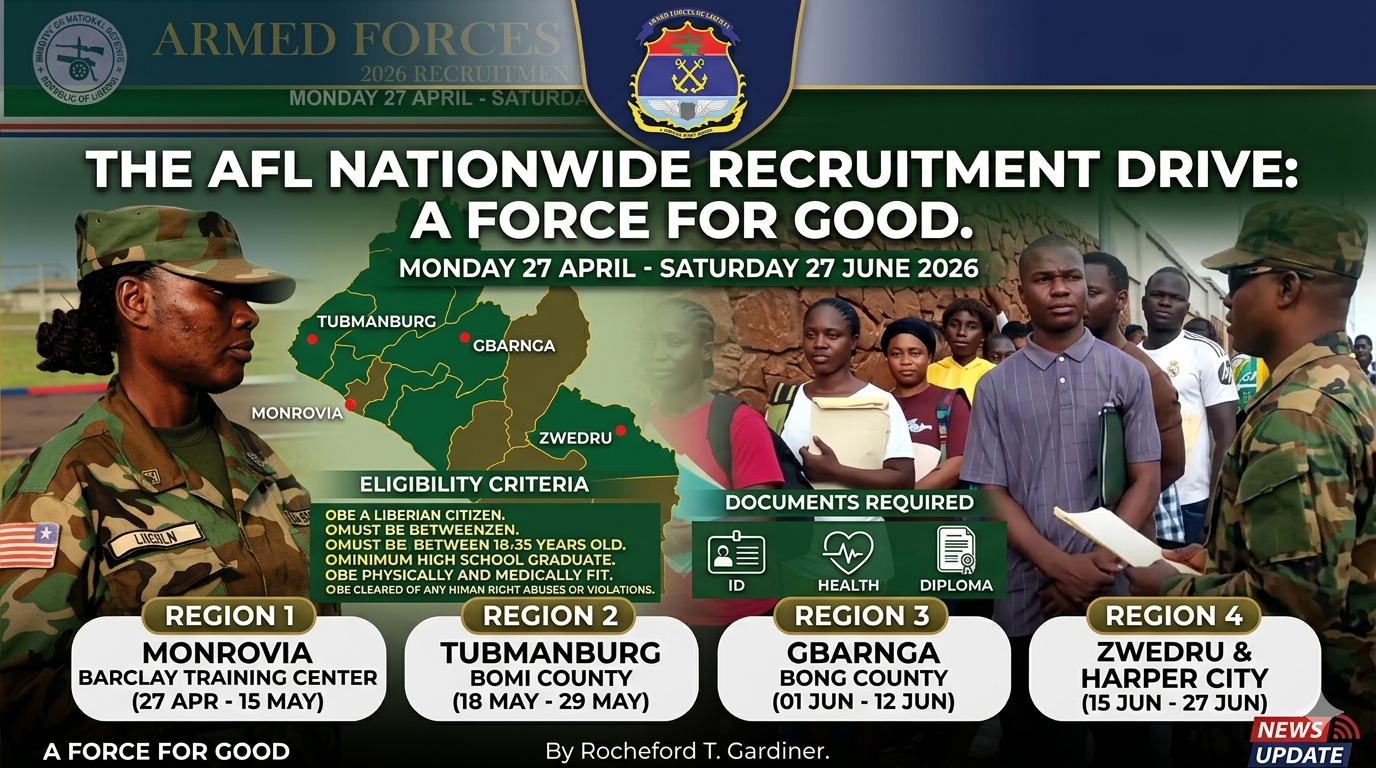
By Rocheford T. Gardiner Monday, April 27, 2026
MONROVIA – Across the Republic of Liberia, thousands of young men and women gathered on Monday to answer the call of the bugle. From the coastal breeze of Monrovia to the dense forests of the southeast, the Armed Forces of Liberia (AFL) recruitment drive saw an unprecedented surge in applicants, signaling a renewed—if complicated—surge in national fervor.
The recruitment process was decentralized across four strategic regions to ensure nationwide participation. Designated hubs included Tubmanburg, Gbarnga, and the southeastern centers of Harper and Zwedru. However, the most striking scenes unfolded at the Barclay Training Center (BTC) in Monrovia.


A Surge in Female Applicants
Observers at the BTC noted not just the sheer volume of candidates, but a significant and “amazing” number of female hopefuls. This shift marks a potential turning point for the gender composition of the AFL, as young Liberian women increasingly seek roles on the front lines of national security.
The motivations for enlisting are as diverse as the recruits themselves. While many cited a deep-seated desire to “serve and defend” their motherland, others were candid about the economic realities. In a country where formal employment remains elusive, the AFL is viewed by many as a vital job opportunity.
The Shadow of Sorlumba
Patriotism, however, is being fueled by more than just civic duty. A palpable sense of anger was visible among recruits following recent territorial disputes at the Liberia-Guinea border. For approximately two months, Guinean forces are still reportedly occupying the Liberian town of Sorlumba.
“We cannot just sit and watch our land be taken,” one young applicant in Zwedru remarked. This border friction has clearly acted as a catalyst, driving many to the recruitment centers with the specific intent of reclaiming territorial integrity.
The Crisis of Capacity
Despite the enthusiasm on the parade grounds, a shadow hangs over the AFL’s ability to absorb this new influx. The army has been plagued by mass desertions over the last decade, often driven by poor living conditions, stagnant salary structures, and a lack of upward mobility.
Soldiers currently serving, speaking on the condition of anonymity, expressed deep skepticism regarding the logistics of the expansion.
“My greatest concern is where are they going to house an additional 600 men?” one soldier asked. “The current living conditions are hardly appreciable at our current strength. Since the government is always complaining about ‘no money,’ how exactly are they going to feed and cater to all these additional people during boot camp?”
The Financial Shortfall
The timing of the recruitment drive is also raising eyebrows in the halls of the Legislature. While lawmakers recently approved $600,000 USD in a supplementary budget for the army, critics argue this is a drop in the bucket.
With the AFL already struggling to maintain its current barracks and provide adequate welfare for its personnel, it remains unclear how the supplementary funds will cover the high costs of training, outfitting, and housing hundreds of new soldiers. As the recruitment drive continues, the Ministry of National Defense faces a daunting challenge: balancing the urgent need for a stronger border presence with the stark reality of a strained national coffer.
